


You've got one free day, a full tank, and a family or travel companion who wants something different from the usual Sonoma County routine. One person is picturing redwoods, another wants a beach, and someone else is lobbying for museums, history, skiing, or amusement rides. The right choice depends less on a generic “best” destination than on how far you're willing to drive, when you'll leave, how much parking hassle you'll accept, and whether the day should feel active or leisurely.
This guide compares CA day trips from Sonoma County by realistic driving expectations, activity mix, seasonal timing, access decisions, and flexible half-day or full-day schedules. Each recommendation also includes practical details for places to visit, eat, play, or stay, including a matched image where available, operating-hour guidance, an address, access notes, and review context. Confirm current schedules, reservations, road conditions, and business details before publication or departure, because those details can change.
Sonoma County is a sensible starting point for regional day trips. In 2025, the county received 10.5 million visitors, and 54.6%, or about 5.75 million people, came for the day rather than staying overnight, according to Sonoma County tourism performance information. That pattern supports practical routes that begin in Sonoma County and end at a beach, forest, city viewpoint, historic site, or mountain trail. For more inspiration, browse these best day trip ideas for 2026, then use Sonoma County Navigator to shape the outing around real departure times and access conditions.
1. San Francisco Golden Gate and Bay Views Day Trip
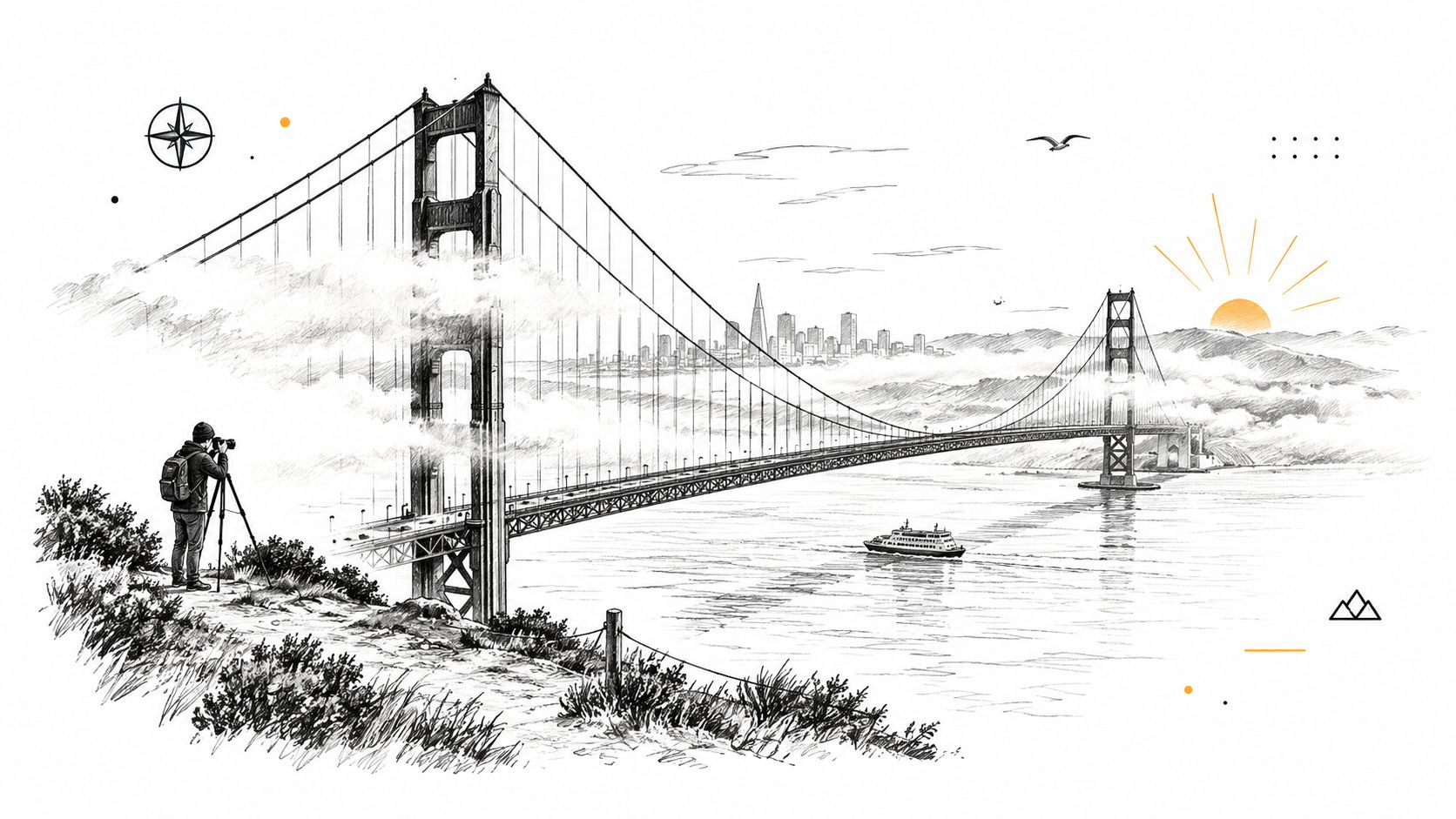
From central Sonoma County, allow roughly 1.5 to 2.5 hours each way, depending on your starting town, bridge traffic, and destination within San Francisco. This is the most flexible urban option on the list. You can build a photography-focused morning around Battery Spencer, Lands End, and the Sutro Baths ruins, or create a broader city day with the Presidio, Palace of Fine Arts, North Beach, Fisherman's Wharf, and Twin Peaks.
Start early with a Golden Gate walk, then spend about two hours on Presidio trails before brunch near the Palace of Fine Arts. In the afternoon, use public transit or walk between neighborhoods rather than repeatedly moving the car. A sunset plan at Twin Peaks deserves about 90 minutes, followed by dinner in the Mission District.
Access, food, and timing
Weekday mornings generally make parking and landmark photography easier. San Francisco's weather can shift quickly, so bring layers even when Sonoma County feels warm. Cable car passes may make sense if you'll use the system repeatedly, but don't build the entire day around finding a parking space near every attraction.
For a cultural stop, City Lights Booksellers at 261 Columbus Avenue, San Francisco, CA 94133 is a useful North Beach anchor. Hours vary by department and can change, so verify them before leaving. Reviews commonly emphasize the store's literary history and atmosphere, while some visitors note that its compact spaces can feel busy.
For a broader local route, use this San Francisco places to visit guide. It's a better planning approach than trying to cover every famous landmark in one exhausting loop. Keep the car parked for a neighborhood cluster, and treat Twin Peaks as the final viewpoint rather than an extra stop squeezed into the middle of the day.
2. Mendocino Coastal Charm and Wine Country Escape
Mendocino works best when you want the drive itself to feel like part of the trip. From Sonoma County, estimate about 2.5 to 3.5 hours each way, depending on your departure point and the route through CA-128 and CA-1. The Victorian village, headlands, galleries, coastal trails, and relaxed dining create a strong romantic or slow-travel day, but the distance makes a rushed itinerary a poor trade.
Give yourself at least five or six hours on the ground. A romance-focused schedule could begin with breakfast at your lodging, continue with a Headlands walk, and move to lunch at Cafe Beaujolais before a scheduled Navarro tasting. Finish with a sunset along the coast. A nature-oriented version can pair the Mendocino Coast Botanical Gardens with coastal walking, although adding Point Arena Lighthouse turns the outing into a demanding full day.
What to reserve and what to skip
Call or book ahead for wine tastings that require appointments. Coastal fog and wind can make temperatures feel cooler than expected, so layers and binoculars are useful, particularly during the whale-watching season from December through May. Boatyard Grill is better approached early if you want to avoid a long wait.
For a possible overnight extension, use the Mendocino hotels guide to compare lodging before committing to the long return drive. Verify each property's current hours, address, parking arrangement, accessibility, and recent review pattern. A hotel review that praises a quiet location may also signal a longer walk to dinner, which matters after a full day on the headlands.
The central village is walkable, but don't assume every coastal attraction is close enough to reach on foot. Save addresses before leaving Sonoma County, keep food and water in the car, and check the return route before sunset. Mendocino is rewarding when you accept its pace. It's less successful when you try to combine the village, multiple tastings, Point Arena, and a late dinner into one rigid schedule.
3. Santa Cruz Boardwalk and Beach Town Adventure
Santa Cruz is a strong family choice because it combines rides, beach time, surfing, redwoods, and an easygoing downtown. From Sonoma County, plan on roughly 2 to 3 hours each way, with traffic making the return trip particularly variable. The Boardwalk gives children an immediate focus, while Cowell Beach, Natural Bridges, and downtown restaurants offer alternatives when the amusement area becomes crowded.
For a family day, arrive early at the Boardwalk, ride the Giant Dipper and other attractions, then eat lunch before taking a beach walk and stopping for ice cream. An active schedule can start with a surf lesson at Cowell Beach, continue with lunch at The Crow's Nest, and finish at Natural Bridges or Seabright for sunset.
A practical Santa Cruz split
Boardwalk vendors are convenient, but downtown restaurants often provide a calmer meal and a broader choice of food. Weekdays and shoulder seasons, particularly spring or early fall, usually make the experience easier than the busiest summer pattern. Bring a swimsuit even if nobody plans to swim. Wading and beach play can still be worthwhile when the water feels too cold for a long session.
The Santa Cruz Beach Boardwalk is at 400 Beach Street, Santa Cruz, CA 95060. Hours vary by date, season, and attraction, so check the official calendar before driving south. Reviews frequently praise the historic atmosphere and family entertainment, while visitors also mention crowds and variable ride availability as factors to plan around.
Arrive early for Natural Bridges parking. The stop works better as a focused coastal visit than as a quick add-on after a full day of rides. If children need downtime, replace the second major attraction with a downtown stroll, a casual meal, or a short beach session. That flexibility is what makes Santa Cruz one of the more forgiving CA day trips for mixed-age groups.
4. Big Sur Dramatic Coastline and Hiking Adventure
Big Sur is the most ambitious coastal route here. From Sonoma County, estimate roughly 3.5 to 5 hours each way, depending on traffic, your starting point, and the specific Big Sur destination. That makes a same-day visit possible only with an early departure, a tightly chosen itinerary, and a willingness to spend much of the day in the car. For most travelers, an overnight stay is the more comfortable decision.
A scenic schedule can begin with Bixby Bridge photographs, continue to McWay Falls, include lunch, and finish with Pfeiffer Beach if access is available. A hiking-oriented route can use Point Lobos as the opening stop, take lunch in Carmel, and then continue south toward McWay Falls. Don't try to treat every pullout as mandatory. Select a few viewpoints and leave time for parking, walking, and unexpected road delays.
Road conditions matter more here
Start at dawn for better light and a stronger chance of finding parking. Check current road conditions before departure, fill the gas tank in advance, and verify access to state park areas and beaches. McWay Falls is often more manageable before late morning, while coastal fog can improve photography in one area and obscure views in another.
Point Lobos State Natural Reserve is at 62 California 1, Carmel-By-The-Sea, CA 93923. Hours and access rules should be verified before travel. Reviews commonly praise the trails, wildlife, and scenery, but visitors also point out that parking capacity can shape the entire visit.
Whale watching is a possible seasonal bonus from December through May, but it shouldn't control the route unless you've checked conditions and chosen an appropriate stop. Bring water, food, layers, comfortable shoes, and binoculars. Big Sur rewards patience and punishes overplanning. If the return drive would put you on unfamiliar coastal roads after dark, book a room and turn the outing into a slower overnight escape.
5. Lake Tahoe Alpine Recreation and Mountain Escape
Lake Tahoe is a major commitment from Sonoma County, with an estimated drive of about 3.5 to 5 hours each way depending on the shore, traffic, weather, and route. It can work as a single-day winter mission for committed skiers, but summer recreation is easier to organize when you choose one shoreline and one primary activity. Emerald Bay, Sand Harbor, mountain trails, and village dining all compete for time.
A winter plan should stay focused: leave early, attend a ski lesson or spend the morning on the slopes, then have dinner in the village before the return drive or overnight stay. In summer, photograph Emerald Bay from Inspiration Point, continue toward Sand Harbor for a swim, hike a manageable section of the Tahoe Rim Trail, and stop for sunset.
Choose the shore before you leave
North Shore generally suits travelers looking for a quieter atmosphere, while South Shore offers a denser mix of entertainment and services. Don't build a loop around the entire lake if your priority is hiking or beach time. Popular beaches can fill early, so a summer departure before 8 a.m. is a practical target for access, based on the itinerary plan rather than a guarantee of availability.
Winter travelers should check Caltrans conditions and carry chains when required. Summer hikers need water, sun protection, and enough time to adjust to altitude. A trail that looks short on a map can feel more demanding at elevation, especially after a long drive from Sonoma County.
Emerald Bay State Park is at 138 Emerald Bay Road, South Lake Tahoe, CA 96145. Hours, parking rules, and seasonal access can change, so verify them with the park before departure. Reviews often celebrate the views and photography opportunities, while access complaints commonly center on parking and crowding.
Tahoe is best for travelers who enjoy ambitious logistics. If your group wants a relaxed beach day with little driving, choose a closer destination. If everyone agrees that the alpine setting is the point, keep the schedule narrow and protect time for weather delays.
6. Carmel-by-the-Sea Artistic Coastal Escape
Carmel-by-the-Sea offers a polished coastal day with galleries, boutiques, restaurants, and a wide beach. From Sonoma County, expect about 2.5 to 3.5 hours each way, with the exact time shaped by traffic and your route through US-101 and CA-1. It's farther than a casual local outing, but the village is compact enough to make a focused day feel coherent.
Begin with a morning gallery crawl while the streets are relatively calm. Move to a casual lunch on a side street, then walk Carmel Beach before dinner. If you want more nature, replace part of the gallery time with Point Lobos, then return to Carmel for shopping and a sunset beach walk.
Spend selectively
Carmel's appeal comes from pacing, not from checking off every shop. Lunch on side streets can be less hectic than choosing a restaurant directly on Ocean Avenue. Galleries are strongest early in the day, while Carmel Beach works well as a late-afternoon reset before dinner.
Carmel Beach is accessed from Ocean Avenue and Scenic Road, Carmel-By-The-Sea, CA 93921. Verify local parking rules, beach guidance, and any seasonal restrictions before leaving. Reviews typically praise the white sand, scenery, and walkability, while some visitors mention limited parking and the town's higher price level.
Point Lobos State Natural Reserve is a useful companion stop, but check visibility and access before driving there. A foggy day can still make the trails worthwhile, though it may not deliver the open-water views you expected. Keep the schedule flexible enough to swap a viewpoint for galleries or a longer meal.
For an overnight version, check lodging details carefully. Confirm the address, parking, check-in hours, accessibility, and recent reviews rather than choosing only by photographs. Carmel works particularly well Tuesday through Thursday, when shoppers and photographers can take more time with the village's small courtyards and galleries.
7. Half Moon Bay Pumpkin Patches and Coastal Charm
Half Moon Bay is one of the easiest focused escapes from Sonoma County. Allow roughly 1.5 to 2.5 hours each way, depending on your departure point and CA-92 traffic. In autumn, pumpkin patches and farm stands make it a natural family destination. At other times of year, Mavericks, coastal trails, seafood, and Main Street shopping give the town enough structure for a relaxed day.
A fall family schedule should start at a pumpkin patch, continue with chowder or seafood near the harbor, include a market stop, and finish with a coastal walk. For a year-round route, explore the Mavericks area, eat lunch, browse Main Street, and walk part of the California Coastal Trail.
Avoid the predictable bottleneck
September can offer better pumpkin selection, while peak festival days bring heavier demand and more complicated parking. An adjacent weekend may provide a better balance than trying to attend the busiest event period. If you want a farmers market, choose your day deliberately and verify the current schedule before driving.
Estes Ranch is one option for travelers looking for a less hectic pumpkin-patch experience, but confirm current operating hours, seasonal availability, address, parking, and admission details directly before departure. Reviews can help identify whether a patch suits younger children, photographers, or visitors looking for food and activities beyond pumpkins.
Bring layers. Coastal fog can make Half Moon Bay feel much cooler than inland Sonoma County. Mavericks is a viewing and photography stop, not a casual swimming beach, and conditions can be serious. Keep children close to marked paths and follow local signs.
This is a good half-day destination when you leave early, but it can also fill a full day if you add seafood, shopping, and a coastal walk. Its biggest advantage is recoverability. If one farm is crowded, you can shorten the visit and spend more time near the coast without losing the day.
8. Mount Shasta Alpine Wilderness and Volcanic Drama
Mount Shasta is a long-haul option from Sonoma County, with an estimated drive of about 4.5 to 6 hours each way. It's better suited to an overnight trip than a conventional day trip, especially if hiking, climbing, or photography is the main purpose. The volcanic peak, alpine lakes, wildflower meadows, and snow terrain offer a different experience from Sonoma County's coast and redwood country.
A practical overnight schedule could include a Lake Siskiyou walk after arrival, a picnic, and Panther Creek Falls if conditions and access allow. The next morning can focus on a mountain hike or a guided climbing objective. Summit attempts generally require careful planning, route knowledge, and attention to permits or other requirements where applicable.
Treat the mountain as an environment, not a backdrop
Spring and early summer can bring wildflowers, but snow and route conditions remain variable. Bring layers, mountain footwear, extra water, and activity-specific gear. Climbers unfamiliar with technical or winter travel should hire a qualified guide rather than improvising on a high mountain.
Lake Siskiyou is at 4239 West A Barr Road, Mount Shasta, CA 96067. Verify current access, hours, seasonal facilities, and any water or trail advisories before departure. Reviews often highlight the lake views and family-friendly recreation, while mountain visitors also mention changing weather, limited services, and the importance of preparation.
Cell coverage can be limited outside town. Download maps, share your route, and leave a realistic return window. Reserve Mount Shasta City lodging ahead during busy summer periods, and confirm the property's address, check-in hours, parking, and recent review comments.
Mount Shasta makes sense for travelers who want an expedition feel. It doesn't make sense for anyone who needs a low-effort outing with guaranteed access to restaurants and attractions. The drive is part of the commitment, so protect the experience with an overnight stay rather than forcing a punishing round trip.
9. Muir Woods National Monument Redwood Walk
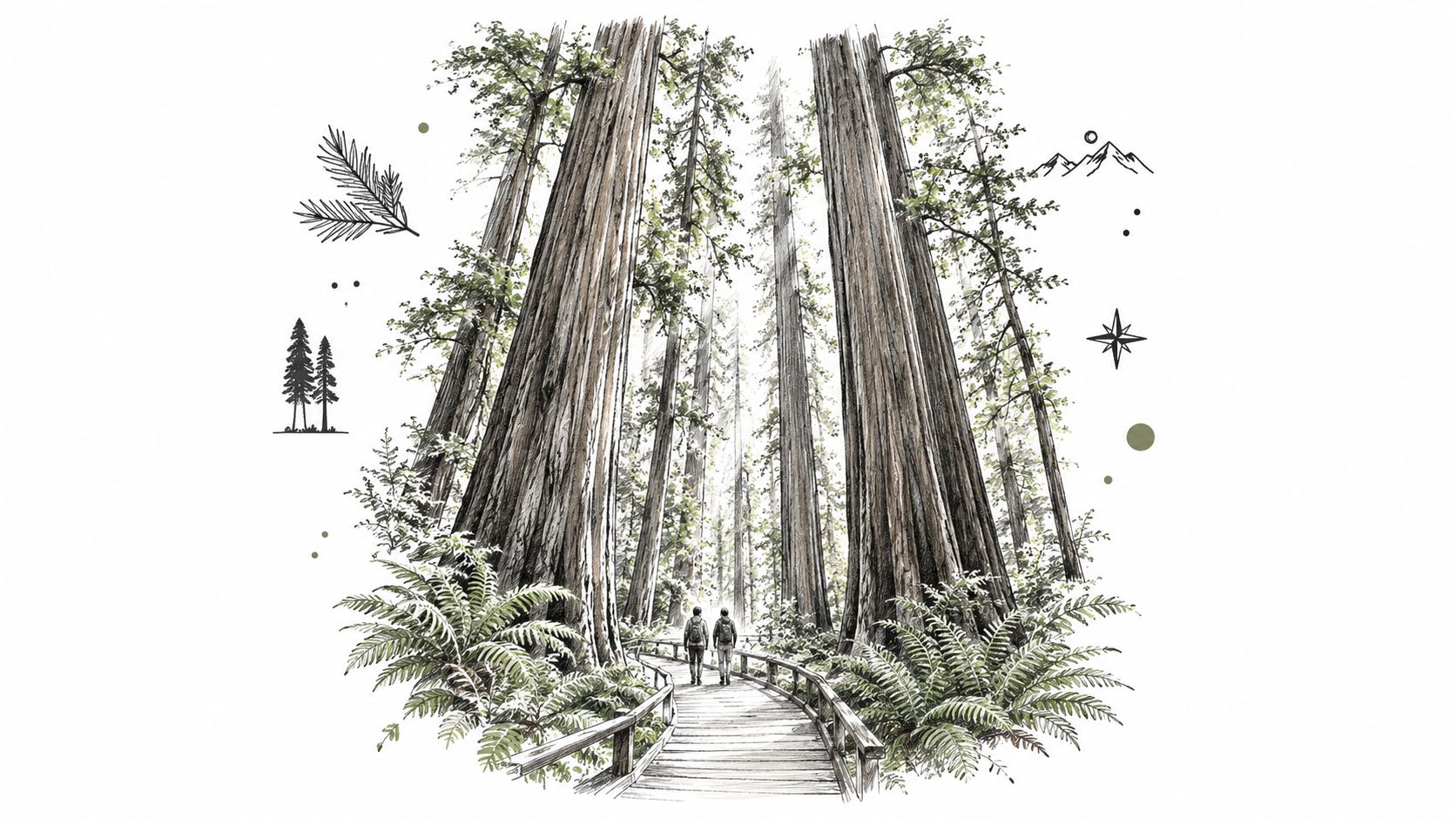
Muir Woods is the shortest-feeling redwood escape on this list, even though traffic through Marin can make the journey unpredictable. From Sonoma County, allow roughly 1.5 to 2.5 hours each way. The monument works as a focused half-day outing, especially for families, older travelers, and visitors who want towering trees without committing to a long backcountry hike.
The accessible boardwalks provide a straightforward introduction to the forest. A short visit can include about an hour on the main loop, time at the visitor center, and coffee in Mill Valley. For a fuller day, combine Muir Woods with Mount Tamalpais or continue toward Muir Beach and Stinson Beach for a coastal finish.
Reserve access before driving
Parking and shuttle reservations are required in advance during busy periods, and arriving without a plan can turn a simple forest walk into a frustrating search for alternatives. Weekday mornings are generally the best choice for a quieter visit. Bring a rain jacket during wet months because the forest can stay damp even when conditions elsewhere look comfortable.
Muir Woods National Monument is at 1 Muir Woods Road, Mill Valley, CA 94941. Verify current reservation requirements, hours, shuttle information, accessibility, and parking instructions through the official National Park Service site before departure. Reviews commonly praise the redwoods and peaceful atmosphere, while some visitors note that narrow paths and crowds can reduce the sense of solitude.
Don't overpack the itinerary. The trees are the main attraction, and a short walk can be more satisfying than rushing through several additional stops. If you add Stinson Beach, save its address and check coastal parking separately. Muir Woods succeeds because it offers a clear experience with a manageable range of walking options.
10. Alcatraz Island and Bay Cruise
Alcatraz creates a history-focused San Francisco day around a ferry ride, a former federal prison, cellhouse audio tour, and views across the Bay. From Sonoma County, plan roughly 1.5 to 2.5 hours each way, then add time for downtown parking, boarding procedures, and walking around the waterfront. The island works best as the day's anchor, not as a rushed addition between unrelated attractions.
Book the earliest available ferry when possible. A morning departure leaves room for the cellhouse tour, island viewpoints, and a late lunch near Fisherman's Wharf. You can then choose one nearby attraction, such as the Exploratorium, rather than trying to cross the city for a second major appointment.
Make the ferry the fixed point
Listen to the complete audio tour. It provides the historical structure that turns a scenic ferry ride and cell inspection into a more meaningful visit. Wear comfortable shoes and bring a light jacket because the waterfront and island can feel cooler than inland Sonoma County.
Alcatraz Island is accessed through Pier 33 Alcatraz Landing, San Francisco, CA 94133. Ferry schedules, ticket availability, tour types, hours, and boarding instructions should be verified with the official operator before departure. Reviews often praise the audio experience, island setting, and historical context, while visitors also mention steep walking areas and the importance of booking ahead.
A seasonal twilight tour can offer different city views, but it requires more careful planning for the return drive. Families with younger children may prefer the first ferry, when energy levels are higher and the schedule is easier to control. Save the pier address, allow time for security and boarding, and avoid assuming that a regular parking space will be available nearby.
Top 10 California Day Trips Comparison
| Destination | 🔄 Complexity | ⚡ Travel time / Efficiency | 💡 Resource requirements & tips | 📊 Expected outcomes | ⭐ Key advantages |
|---|---|---|---|---|---|
| San Francisco Golden Gate & Bay Views Day Trip | Moderate, urban driving, limited/paid parking, high crowds | ~90 min drive via US-101; transit alternatives available | Paid parking or transit; bring layers; start early to avoid fog/parking | Iconic bridge & skyline views, short hikes, strong photo opportunities | ⭐⭐⭐⭐ Recognizable landmarks; diverse activities; good public transit |
| Mendocino Coastal Charm & Wine Country Escape | Low–Moderate, winding coastal roads, narrow streets | ~90 min drive via US-101 → CA-128; allow extra time on CA-1 | Free village parking; book winery tastings; pack layers for coastal fog | Scenic cliffside views, relaxed village strolls, quality wine tastings | ⭐⭐⭐⭐ Authentic village character; quieter than major tourist hubs |
| Santa Cruz Boardwalk & Beach Town Adventure | Moderate, busy parking, seasonal ride hours, family logistics | ~105 min drive via US-101 → CA-17; short local walks between sites | Paid boardwalk parking; arrive early in summer; bring swim gear | Nostalgic amusement park fun, surfing, tidepooling, family entertainment | ⭐⭐⭐ Family-friendly; affordable amusement; good beginner surf |
| Big Sur Dramatic Coastline & Hiking Adventure | High, long winding CA-1, limited services, possible closures | ~150–180 min drive; slow due to scenic stops and winding road | Fill gas before entry; check CA-1 conditions; plan long day or overnight | Stunning coastal vistas, waterfall beaches, varied hikes, top photography | ⭐⭐⭐⭐⭐ Most dramatic coastal scenery; excellent hiking & photo ops |
| Lake Tahoe Alpine Recreation & Mountain Escape | Moderate–High, long drive, seasonal requirements (chains) | ~200 min drive via US-101 → I-80; seasonal access considerations | Winter chains/AWD may be required; reserve lodging; arrive early for beaches | Year‑round alpine recreation: skiing, swimming, hiking, water sports | ⭐⭐⭐⭐ Wide seasonal activities; excellent infrastructure for outdoors |
| Carmel-by-the-Sea Artistic Coastal Escape | Low, compact village, limited parking, pedestrian-friendly | ~120 min drive via US-101 → CA-1; short local distances | Limited street parking/paid lots; visit mid-week; expect higher prices | Gallery browsing, fine dining, pristine beach walks, Point Lobos access | ⭐⭐⭐⭐ Sophisticated art & dining; walkable, picturesque village |
| Half Moon Bay Pumpkin Patches & Coastal Charm | Low, short drive, seasonal crowd spikes (Sept–Oct) | ~45 min drive via CA-92; very efficient for short outings | Free parking in village; visit early for pumpkins; expect crowds during festival | Family-friendly pumpkin picking, farmers market, coastal trails, seafood | ⭐⭐⭐ Closest short seasonal escape; authentic agricultural feel |
| Mount Shasta Alpine Wilderness & Volcanic Drama | High, long drive, altitude, possible technical routes | ~210–240 min drive via I-5; remote access; allow acclimatization time | Bring alpine gear for climbs; winter requires experience/chains; limited services | Dramatic mountain scenery, solitary hikes, alpine lakes, mountaineering | ⭐⭐⭐⭐ Iconic volcanic peak; fewer crowds; strong photography potential |
| Muir Woods National Monument Redwood Walk | Low, accessible trails but parking reservation often required | ~60–90 min (from Sonoma to Bay Area + parking/shuttle); short on-site loops | Reserve parking/shuttle in peak season; wear sturdy shoes and layers | Towering old-growth redwoods, easy boardwalks, family‑friendly nature access | ⭐⭐⭐⭐ Accessible ancient redwoods close to the Bay Area; educational |
| Alcatraz Island & Bay Cruise | Moderate, advance booking required, timed ferry logistics | ~90 min to San Francisco plus ferry time; strict schedules | Book tickets weeks ahead; arrive early; bring jacket for windy bay | Immersive prison history, strong skyline/bridge photos, guided audio tour | ⭐⭐⭐⭐ Unique historic experience; concise half-day excursion |
Turn the Best-Fit Route Into a Real Day
The best choice depends on the day you have, not the destination that looks most impressive in a search result. If you're leaving Sonoma County late or traveling with children who need frequent breaks, choose Half Moon Bay or Muir Woods. Both can deliver a focused experience without requiring an all-day commitment to the road, although traffic and reservations still matter.
San Francisco gives you the broadest urban mix. You can combine viewpoints, short walks, bookstores, museums, waterfront attractions, and neighborhoods, but the city requires disciplined parking and route planning. Choose one cluster for the morning and another for the afternoon. Driving from the Presidio to the Mission, then back to the waterfront, can consume the time you hoped to spend sightseeing.
Carmel, Santa Cruz, Mendocino, and Big Sur all reward coastal pacing, but they aren't interchangeable. Carmel suits galleries, shopping, dining, and a polished beach walk. Santa Cruz works better for families who want rides, surf, and a lively beach-town atmosphere. Mendocino favors a slower village-and-headlands day, while Big Sur demands the most attention to road conditions, parking, fuel, and daylight.
Tahoe and Mount Shasta deserve honest planning. Tahoe can work for a dedicated ski or alpine recreation day, but winter weather and chain controls can change the route. Mount Shasta is more satisfying as an overnight mountain trip, particularly if you plan a serious hike, climbing activity, or photography session. A long drive followed by a rushed trail visit rarely produces the experience people hoped for.
Match the route to the conditions
Northern California travel patterns can change sharply with season, traffic, events, and weather. Research on regional mobility found that weekday travel in the Northern California megaregion fell by nearly half between January 2019 and April 2020 before returning to pre-pandemic levels by October 2021, as documented in research on Northern California travel behavior. The practical lesson is simple. Don't treat a nominal drive time as a promise.
Caltrans' post-pandemic travel analysis also describes fewer daily person trips, longer average trip lengths, more morning travel, and increased midday and early-afternoon movement associated with hybrid work and school schedules, according to Caltrans travel-pattern findings. For a day trip, that means departure timing deserves the same attention as the destination.
Before leaving Sonoma County, complete a practical final check:
- Confirm current hours: Verify attraction schedules, restaurant service, lodging check-in times, and seasonal closures.
- Reserve access: Book required parking, shuttles, ferries, tastings, tours, and popular activities.
- Check the road: Review Caltrans information, mountain conditions, coastal closures, construction, and weather.
- Save addresses: Put every primary stop, meal, fuel stop, and lodging property into your phone before departure.
- Pack for the route: Carry layers, water, food, comfortable shoes, sunscreen, and activity-specific gear.
- Read reviews carefully: Look for recent comments about parking, access, wait times, noise, accessibility, and service, not just star ratings.
Digital trip tools work best when they help you make decisions rather than display a long list of attractions. Research into travel-planning apps links adoption with usefulness, ease of use, enjoyment, and personalized recommendations, while a separate mobile-travel-app study reported tourist satisfaction at 73% satisfactory or highly satisfactory and found a strong positive relationship between satisfaction and personalized recommendations, summarized in California tourism and travel-app research. For Sonoma County Navigator readers, that supports route planners, stop sequencing, drive-time filters, and flexible half-day options instead of static destination lists.
Google Maps can help verify practical place information, including addresses, hours, phone numbers, websites, ratings, and reviews, as explained in Google Maps place details guidance. Places data can also include regular opening hours, including a representation for locations that stay open around the clock, according to Google's Places API documentation. Reviews are structured place details too, with some Google Places documentation describing a maximum of five returned reviews, as shown in Places review-field documentation. Use these tools as verification aids, then confirm critical details with the attraction or business directly.
Sonoma County tourism data also shows why this planning style matters. In 2025, day visitors generated roughly $0.5 billion, or 33% of total visitor spending, according to Sonoma County research and visitor data. Short trips aren't an afterthought. They support restaurants, museums, beaches, trails, shops, tours, and roadside businesses across the region.
Use Sonoma County Navigator as your local starting point for more outings within a day's drive, from Marin County and Angel Island to Carmel, Santa Cruz, Tahoe, Mount Shasta, Mendocino, and farther California destinations. Browse current guides and recommendations at Sonoma County Navigator, then choose the route that fits your departure time, energy level, season, budget, and tolerance for traffic. Save the addresses, confirm the details, and leave Sonoma County with a plan that still has room for the unexpected.
Sign up for Sonoma County Navigator
Discover Sonoma County! Latest News, places to play, stay, eat, live, shop, learn and more!
No spam. Unsubscribe anytime.