
You’re probably looking at a map right now and wondering whether fort ross vineyards is worth the detour. That’s the right question.
This isn’t a quick tasting-room stop you tack onto a Healdsburg afternoon. It’s a destination on the far Sonoma Coast, the kind of place you reach on purpose. The reward is part wine, part scenery, part perspective. If you plan the day well, it becomes one of the most memorable outings in Sonoma County.
Discovering Sonoma's Most Dramatic Vineyard
The drive sets the tone. Highway 1 gives you the Pacific on one side, steep coastal ridges on the other, and long stretches where wine country feels very far away. Then the route turns inland, the road climbs, and fort ross vineyards starts to make sense. This place was never meant to be casual.
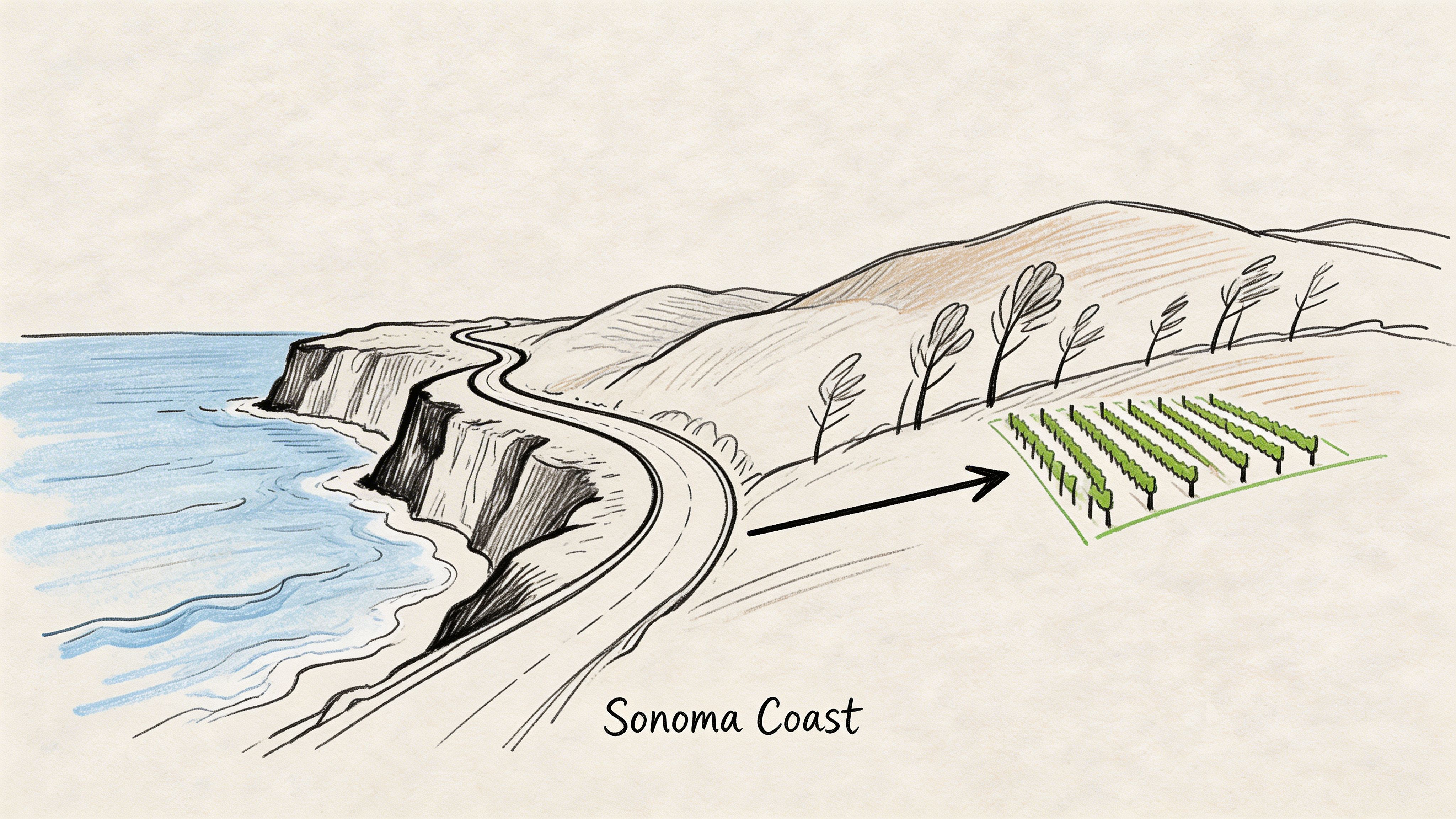
What visitors often underestimate is the emotional shift. You leave the familiar tasting circuit behind and head into a quieter, wilder corner of Sonoma County. By the time you arrive, the vineyard feels earned.
Why the trip feels different
Most county wine outings are built around convenience. Fort Ross works the opposite way. The remoteness strips away the rush that can creep into a day of back-to-back tastings.
That changes how people experience the wines. They slow down. They look out over the ridges. They notice the weather. They ask better questions.
The best visits here happen when you stop treating the tasting as a checkbox and treat it like the main event.
Who will like it most
Fort Ross Vineyards is a strong fit for a few kinds of visitors:
- Pinot and Chardonnay drinkers: If you care about site-driven coastal wines, this is your lane.
- Locals who think they’ve done Sonoma already: This corner of the county still surprises people who know the inland wine routes well.
- Weekend explorers: It pairs well with beaches, Fort Ross, Jenner, and a scenic Highway 1 loop.
It’s less ideal for anyone trying to cram in a long list of winery stops. The road, the pace, and the location all push against that style of trip. That’s a good thing.
From Russian Outpost to Pioneering Vineyard
Fort Ross-Seaview has a deeper wine history than many people realize. The area’s viticultural story began in 1817, when Captain Leontii Andreianovich Hagemeister planted the first grapevines in Northern California at the Fort Ross settlement, which operated from 1812 to 1841 as Russia’s southernmost outpost in North America, as noted in the Fort Ross-Seaview AVA history.
That matters because fort ross vineyards doesn’t sit in a made-up lifestyle destination. It sits in a place where agriculture, survival, and coastal adaptation have been part of the story from the start.
The old story and the modern one
The Russian chapter gives the region its first layer of identity. The modern chapter adds another. Lester and Linda Schwartz bought the property in the late twentieth century and took on the difficult work of building a vineyard in a rugged coastal setting, a place whose challenges were widely regarded as prohibitive.
They didn’t arrive at a finished estate. They started with raw ground and built the site piece by piece over years of testing, planting, and infrastructure work. That kind of development usually leaves a fingerprint on the finished experience. At Fort Ross, you can feel it in the layout, the farming choices, and the seriousness of the wines.
What the pioneering effort actually means
A lot of winery histories use the word “vision” loosely. Here, it fits. Coastal ridge viticulture isn’t forgiving. Every practical problem is bigger up there.
Think about what had to go right:
- Site selection: Not every coastal hillside deserves vines. Exposure, drainage, and fog patterns matter.
- Patience: Testing varieties and blocks before expanding is slower than rushing acreage into production.
- Infrastructure: Water, access, drainage, and protection from wildlife aren’t side issues in a remote site. They’re the backbone of the project.
That’s one reason the place still feels grounded rather than polished into generic luxury.
Local perspective: The most convincing vineyard stories are the ones you can see on the ground. At Fort Ross, the steep terrain and block-by-block farming make the backstory believable.
Why the history improves the tasting
Knowing the local timeline changes the way the wines land in the glass. The area holds both the earliest known North Coast vine history and a modern example of careful, high-elevation coastal farming. That combination gives fort ross vineyards more than scenery. It gives it continuity.
For visitors, that means the day doesn’t have to stop at tasting notes. You can build a coastal itinerary around actual history, then end with wines grown in one of Sonoma County’s most hard-won vineyard settings. That’s a much richer experience than a standard tasting-room stop.
The Extreme Terroir of Fort Ross-Seaview
The simplest way to understand this AVA is to think of it as a vineyard island in the sky. The fog sits lower. The vineyards rise above it.
The Fort Ross-Seaview AVA is defined by elevation, with vineyards planted between 920 and 1,700 feet. Fort Ross Vineyard sits one mile from the Pacific at 1,200 to 1,700 feet, where temperatures rarely drop below 55°F or rise above 85°F, creating an optimal environment for grape physiological activity, according to Fort Ross Vineyard’s history of the vineyard.
Why elevation matters more here
In broader Sonoma Coast conversations, people often focus only on cold weather. That misses the point. Cold alone doesn’t make great fruit. The useful combination is cool air plus enough sunlight for steady ripening.
That’s where Fort Ross-Seaview separates itself. High-elevation vineyard sites can sit above dense marine fog for part of the day while still feeling the ocean’s cooling effect. The vines don’t race. They develop slowly.
For wine drinkers, that usually shows up as:
- Lifted acidity
- More detailed aromatics
- Structure without heaviness
- A savory edge that coastal sites often deliver well
How to taste the site
If you want to get more out of a tasting, look for cause and effect rather than just flavor words.
Start with these questions:
- Does the wine feel taut or broad? Fort Ross-Seaview often leans taut.
- Is the fruit ripe without feeling hot? That balance is one of the signatures of a well-farmed cool coastal site.
- Do savory notes sit alongside fruit? They often do here, especially in Pinot Noir.
Practical rule: At fort ross vineyards, pay attention to texture as much as aroma. The site often shows itself through tension and shape, not just fruit intensity.
What doesn’t work when describing these wines
Overripe tasting language doesn’t fit this place well. If you go in expecting plush, jammy coastal reds, you may misread what the vineyard does best. The appeal is precision. The wines tend to reward slower tasting and food on the table.
That’s also why fort ross vineyards is such a good stop for visitors who want to understand terroir in practical terms. You don’t need a technical background. You just need to notice how altitude, ocean influence, and exposure shape the glass.
Tasting the Coast Notable Wines and Pairings
Fort Ross Vineyards earns its reputation on Pinot Noir and Chardonnay, but Pinot is where the vineyard’s detail work becomes easiest to see. The estate’s 40 acres of Pinot Noir use heritage clones including Calera, Pommard, and Swan alongside Dijon selections, planted across 33 distinct micro-blocks, with fruit harvested individually and fermented with native yeasts. The result is complex wine with profiles of dried herbs, bright cherry, and spice, as described in Fort Ross Vineyard’s varieties, clones, and selections overview.
That block-by-block approach matters. When a vineyard crew picks and ferments parcels separately, they preserve distinctions that would disappear in a bulk harvest. At fort ross vineyards, that tends to translate into more layered Pinot Noir rather than a single-note fruit style.
What to expect in the glass
The Pinot Noirs often show the savory side of cool-climate coastal fruit. Dried herbs, cherry, spice, and earthier tones fit this estate better than simple ripe-fruit descriptions.
Chardonnay deserves attention too. In a site like this, good Chardonnay usually leans on freshness and structure rather than sheer weight. That makes it a strong match for local seafood and cheeses.
If you want a broader sense of regional context before you go, Sonoma County Navigator’s guide to wines from Sonoma is a useful primer.
Fort Ross Vineyards Wine Selection
| Wine | Primary Notes | Local Pairing Idea |
|---|---|---|
| Estate Pinot Noir | Dried herbs, bright cherry, spice | Duck breast or roast chicken with wild mushrooms |
| Pinot Noir from mixed estate blocks | Savory earth, tart red fruit, structure | Sonoma charcuterie and aged local cheese |
| Chardonnay | Coastal freshness, citrus-driven lift, layered texture | Dungeness crab |
| Estate Chardonnay with richer oak influence | Broader palate, still bright | Bodega Bay oysters with butter sauce |
Pairings that work better than they sound
Coastal Sonoma pairings don’t need to be fancy. They need to respect acidity and texture.
A few reliable choices:
- Crab and Chardonnay: Sweet crab meat gives the wine room to show lift rather than oak.
- Oysters and Chardonnay: Best when the prep stays simple.
- Mushrooms and Pinot Noir: This is the easiest way to bring out the wine’s forest-floor side.
- Roast chicken and Pinot Noir: More dependable than steak with this style.
Don’t over-muscle the food. Fort Ross wines usually show better with dishes that leave space for freshness and savory detail.
What often disappoints
Big sauces, sugary glazes, and heavily smoked barbecue can flatten these wines. That’s not a flaw in the bottle. It’s a mismatch. Fort Ross fruit tends to carry nuance, and nuance gets buried fast.
If you’re planning a picnic or a post-tasting dinner, aim for restraint. This is one of those vineyards where a well-chosen local cheese, good bread, and seafood from the coast can outperform a much more elaborate meal.
Planning Your Visit to the Tasting Room
The practical side matters here more than at most Sonoma wineries. Fort Ross is remote, the roads demand attention, and a little prep makes the day much better.
Core visit details
- Address: 15725 Meyers Grade Rd, Jenner, CA 95450
- Hours of operation: Check current tasting-room hours directly before leaving. Coastal wineries can change schedules seasonally.
- Reservations: Strongly recommended. In a remote AVA with limited public access, showing up without a plan is a gamble.
- Reviews: Visitors consistently talk about the views, the sense of arrival, and the difference between this experience and inland tasting routes.
The biggest planning issue is the road. The Fort Ross-Seaview AVA is exceptionally remote, with few wineries open to the public, and reaching Fort Ross Vineyards requires a 2.6-mile drive up the steep and twisting Meyers Grade Road, according to Sonoma County Tourism’s guide to the Fort Ross-Seaview wine region and appellation.
Drive strategy that works
Don’t schedule this tasting too tightly against another stop. The coast has its own pace, and that final climb is not where you want to feel rushed.
A few smart habits:
- Leave margin: Build extra time into the drive from Jenner, Guerneville, or Bodega Bay.
- Eat first if anyone in your group gets carsick: The winding section can be rough on empty stomachs.
- Avoid stacking too many commitments after the tasting: The return drive needs the same focus as the arrival.
Arrive early enough to settle in. The view is part of the tasting, and it’s wasted if everyone’s stressed from the road.
Accessibility and expectations
Remote coastal properties often come with trade-offs. Expect natural terrain and ask ahead if anyone in your group needs specific accessibility accommodations. That’s also the best approach for families with small kids or visitors bringing pets. Policies can shift, and remote sites usually appreciate advance communication.
For a closer look at the setting before you go, this video helps with expectations:
Best timing for the day
Morning coastal stops and an afternoon tasting usually work best. That gives the marine weather time to evolve and keeps the day from feeling rushed.
If you try to treat fort ross vineyards like a quick roadside tasting, it won’t click. If you give it room, it’s one of the most rewarding wine visits on the coast.
Building a Day Trip Itinerary on the Sonoma Coast
A trip to fort ross vineyards works best as a full-day coastal plan. Once you accept that, the logistics get easier and the day gets better.
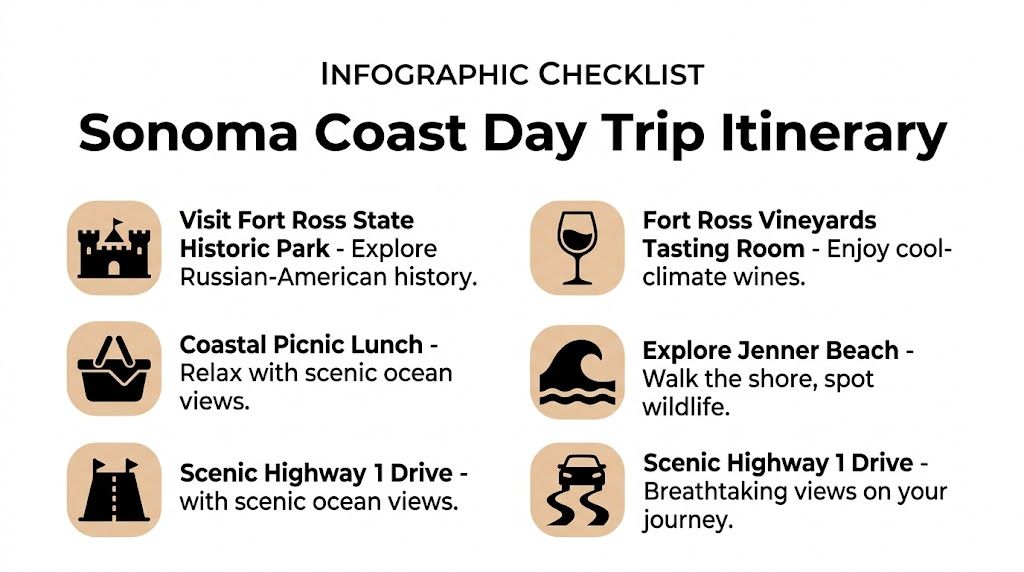
The tasting room opened in spring 2012, making it the first and, at the time, only public tasting room on this stretch of the Sonoma Coast. That helped turn the vineyard into a practical anchor for a larger day out.
Itinerary one for history and coastline
Start with Fort Ross State Historic Park.
- Address: 19005 Coast Hwy 1, Jenner, CA 95450
- Hours: Check current park hours before leaving
- Why stop: It gives the vineyard visit context. You’ll understand the local Russian-era history before tasting wines grown in the surrounding region.
- Review snapshot: Best for travelers who like meaningful stops, not just scenic ones.
Lunch in Jenner keeps the route manageable. Two dependable formats work well:
River’s End Restaurant and Inn
- Address: 11048 CA-1, Jenner, CA 95450
- Hours: Verify current service hours
- What works: Strong pick if you want a sit-down meal with a view before heading inland
- Image tip: Check the restaurant’s official site or current listing photos before booking so you know the dining-room outlook and parking setup
Cafe Aquatica
- Address: 10439 CA-1, Jenner, CA 95450
- Hours: Confirm same-day hours
- What works: Better for a lighter, more casual stop
- Image tip: Preview current guest photos online for patio conditions and river views
Then head to fort ross vineyards for the main tasting. If you’re comparing Sonoma wine regions for a future outing, Sonoma County Navigator’s roundup of the best vineyards in Sonoma County is a practical next read.
Itinerary two for a scenic explorer day
If you’d rather keep the day outdoors, build it around the coast first.
- Morning walk: Choose a beach or bluff stop in Sonoma Coast State Park and keep it short enough that the tasting still feels relaxed.
- Picnic lunch: Bring simple food that travels well. Bread, cheese, fruit, and chilled seafood are easier than a full spread on a windy coast.
- Afternoon tasting: End at fort ross vineyards, when the contrast between the shoreline and the ridge-top vineyard feels most dramatic.
This second format is often better for locals who’ve already done Fort Ross itself and want a lower-structure day.
One planning note for out-of-town readers
If you’re visiting wine regions in other parts of the country and like a transportation-first approach, resources such as Chicago winery tours show how much easier a tasting day becomes when the driving plan is handled upfront. On the Sonoma Coast, even if you’re self-driving, that mindset helps.
An Essential Stop on the Sonoma Wine Map
Fort ross vineyards matters because it shows a side of Sonoma County that many visitors miss. The site combines deep regional history, demanding coastal geography, and wines shaped by a place that doesn’t make anything easy.
That’s why the visit stays with people. You’re not just sampling bottles. You’re seeing how Sonoma changes when you leave the busy tasting corridors and head toward the edge of the continent.
For locals, it’s one of the clearest reminders that wine country here isn’t one thing. For visitors, it’s a strong case for slowing down and trading convenience for character.
Make the drive with enough time, treat the tasting as the center of the day, and pair it with a coast stop that gives the trip some range. If you want more practical Sonoma outings after this one, Sonoma County Navigator is a good place to keep exploring.
Sign up for Sonoma County Navigator
Discover Sonoma County! Latest News, places to play, stay, eat, live, shop, learn and more!
No spam. Unsubscribe anytime.