


You're in Sonoma County, you want a real San Francisco day out, and you don't want to spend half of it sitting in traffic or wandering without a plan. That's the right instinct. San Francisco is roughly a 1 to 1.5 hour drive from Sonoma County depending on traffic, which makes it one of the easiest major-city day trips in Northern California, but only if you treat it like a focused outing instead of an everything-all-at-once sprint (San Francisco tourism overview and Sonoma drive context).
The mistake I see most often is trying to cram the bridge, the Wharf, Golden Gate Park, Chinatown, a museum, and dinner into one day. That usually turns into parking stress, rushed meals, and a lot of time moving between neighborhoods instead of enjoying any of them. The better approach is to choose one city zone, then build around it.
San Francisco has no shortage of headline attractions. The city drew 23.7 million visitors in 2025 and is projected to reach 24.2 million in 2026, with projected visitor spending of $9.9 billion and support for 63,900 jobs across hotels, restaurants, retail, and cultural institutions (San Francisco visitor and spending projections). That scale matters for day-trippers because the famous places are busy for a reason, and because timing can change your experience.
This guide keeps things practical. For each stop, you'll get an estimated drive time from Sonoma County to that area, hours when they're verifiable, access tips, realistic trade-offs, reviews-style strengths and drawbacks, and image guidance so the visuals match the destination. Sonoma County Navigator is a reader-supported local guide for outings within a day's drive, and San Francisco fits that mission well.
1. Golden Gate Bridge
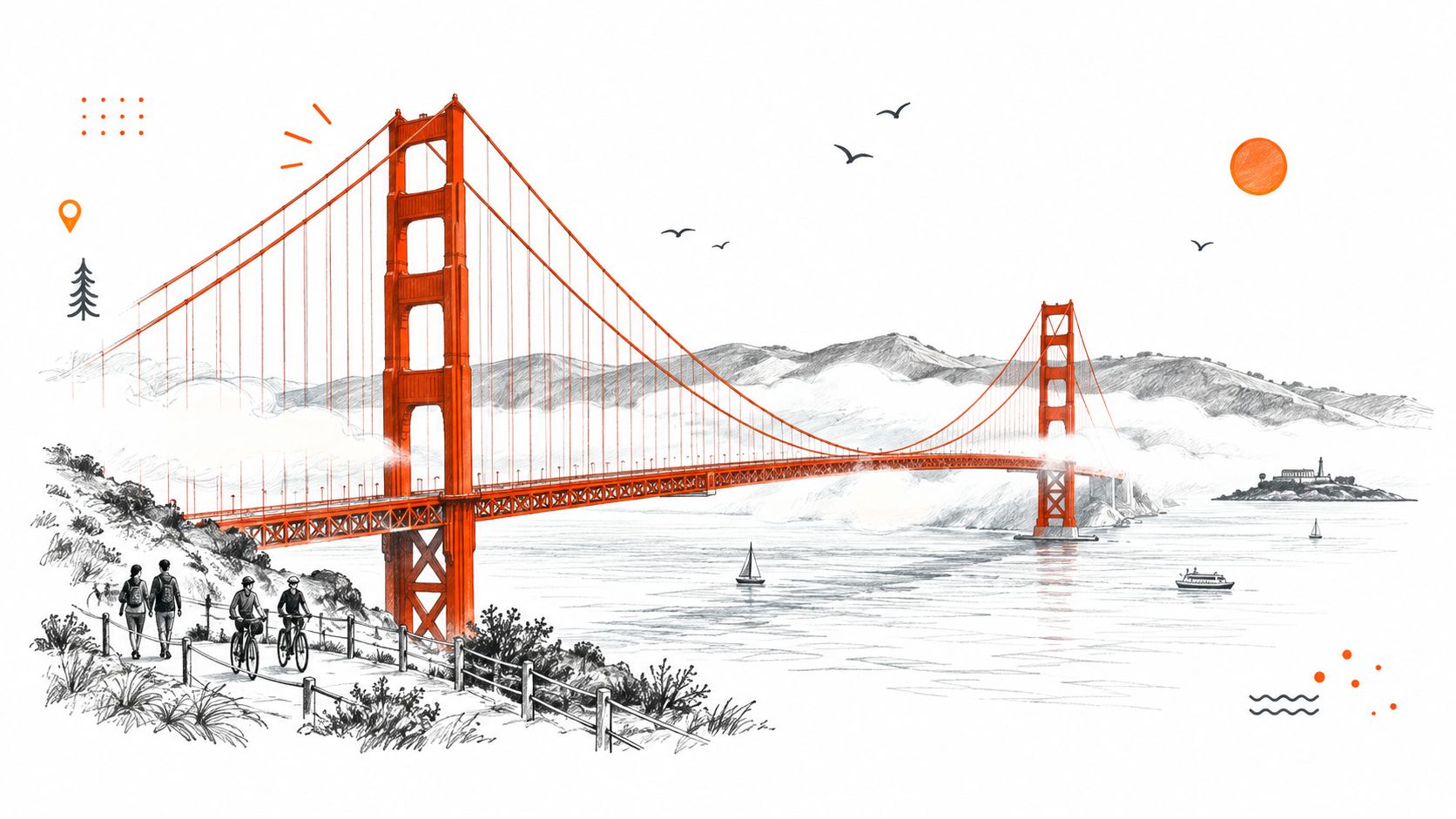
Leave Sonoma County after breakfast and the bridge can be your first San Francisco stop before city traffic stacks up. That makes it one of the easiest headline sights to pair with a realistic day trip, especially if you want an outdoor start and plan to keep the rest of the day on the north or northwest side of town.
From Sonoma County, expect about 1 to 1.5 hours to the bridge area in normal conditions. I'd only use it as a quick opener if the next stop is nearby, such as the Presidio or Crissy Field. If your plan later pulls you toward downtown, the Wharf, or the Mission, time can disappear fast.
Hours and access
Address: Golden Gate Bridge Welcome Center area, Golden Gate Bridge, San Francisco, CA 94129
Hours: Outdoor bridge access varies by area and conditions. Nearby Golden Gate National Recreation Area spaces are generally accessible 24 hours in most areas, while some areas are open from 6 a.m. until one hour after sunset, and parking lots are open between sunrise and sunset (Golden Gate National Recreation Area hours).
Arrive with a purpose. The bridge can be a 20-minute photo stop, a one-hour walk, or a longer outing once parking, overlooks, and weather delays are added.
Best day-trip use: Treat the bridge as either a focused viewpoint stop or a short walking activity. Full-span ambitions usually cost more time than Sonoma day-trippers expect.
What to plan for
- Best access strategy: Enter from the north or west side of the city if you want to avoid deeper downtown traffic early in the day.
- Best for families: Walk a manageable section, then shift to open space nearby instead of pushing for the full crossing.
- Best seasonal timing: Fall often brings clearer conditions, while summer can mean heavier fog and colder wind than Sonoma weather suggests.
- Best add-on for outdoor itineraries: Pair it with the Presidio, Crissy Field, or a picnic-style stop rather than another cross-city attraction.
- Best add-on for food itineraries: Use it as a morning anchor, then head to a single lunch zone such as the Marina, the Presidio area, or the waterfront.
The payoff is immediate. You get the color, the scale, the bay, and one of the few San Francisco landmarks that still feels impressive even if you've seen it in photos for years.
The trade-off is exposure. Wind, fog, and limited parking can turn a simple stop into a rushed one, and a full bridge walk is not ideal for every group. For Sonoma County families or mixed-age groups, a partial walk usually delivers the experience without burning too much of the day.
Image guidance matters here. Use wide shots with walkers or cyclists on the span, or an overlook image that clearly shows the bridge and bay. Avoid generic skyline images for this section.
2. Alcatraz Island and Penitentiary
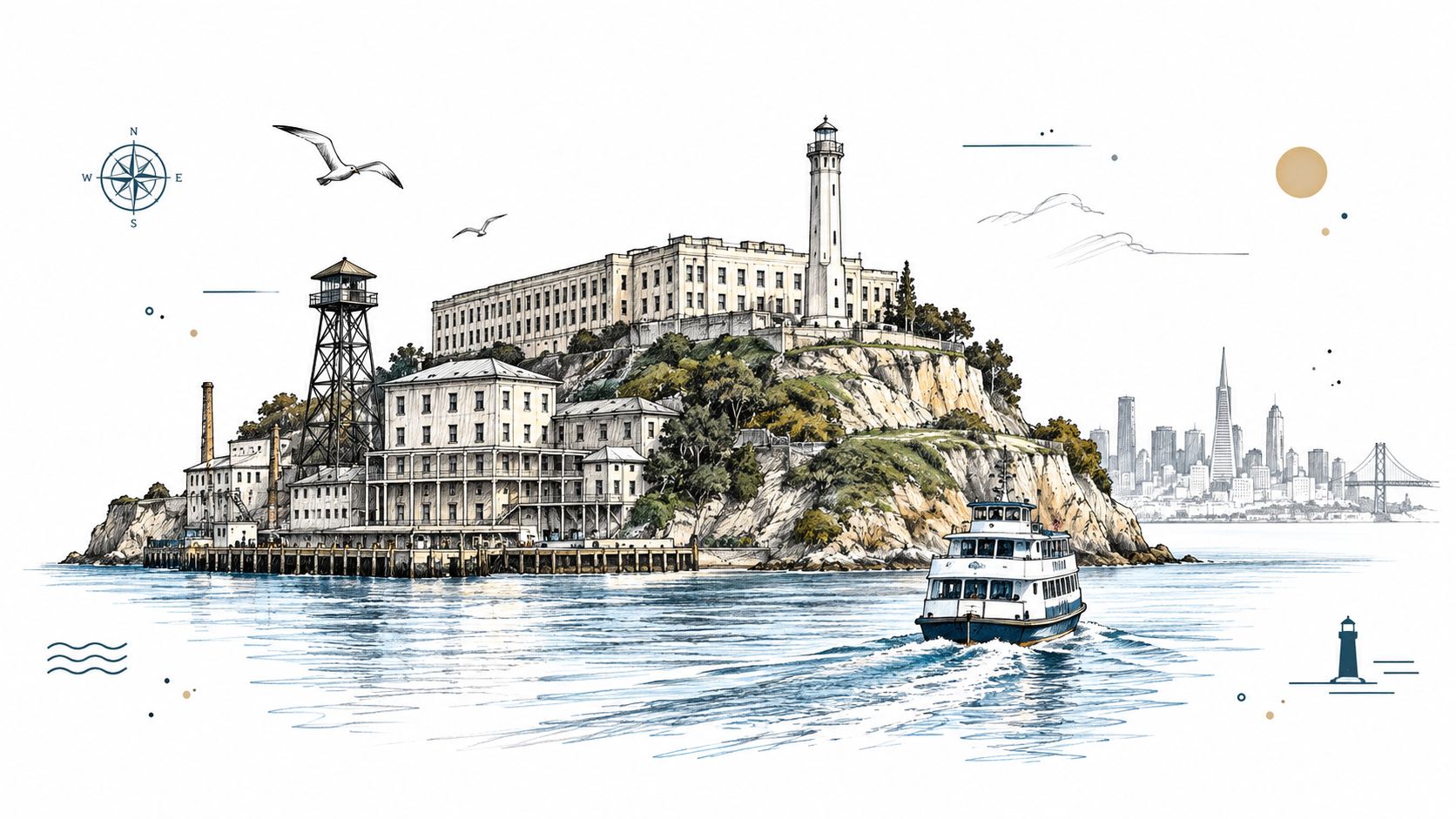
Leave Sonoma County after breakfast, reach the waterfront before late morning, and Alcatraz can be the centerpiece of a day that still leaves room for lunch and one nearby neighborhood. Miss your ferry window, though, and the whole plan gets tighter fast.
Alcatraz rewards people who like defined logistics. The ferry departs from Pier 33, the visit runs on a set schedule, and the island asks for more walking than some visitors expect. For a Sonoma day trip, that structure is useful. You know your main event is locked in, which makes the rest of the day easier to shape.
I usually treat this as a commitment, not a filler stop. The crossing itself is part of the appeal, and the island has enough atmosphere that rushing it undercuts the experience.
Best fit: travelers who want one memorable anchor instead of five rushed stops.
From Sonoma County, the drive to the Pier 33 area often lands in the 1.5 to 2 hour range once bridge traffic, parking, and the last stretch into the waterfront are factored in. That makes timing more important here than at walk-up attractions. Book an earlier ferry if you want breathing room afterward. Book later only if your group is not built for an early departure.
A few practical calls matter more than the usual sightseeing advice:
- Access strategy: Prebook tickets and aim to arrive early enough to handle parking and the walk to Pier 33 without stress.
- Physical effort: Expect uphill sections and uneven pacing, especially with kids, older adults, or anyone who does not enjoy standing in lines and climbing grades.
- Best seasonal timing: Fall often brings clearer bay conditions. Summer can be colder, windier, and grayer than Sonoma visitors expect.
- Best family use: Strong for school-age kids and teens who like stories, audio tours, and boat rides. Less flexible for toddlers who need frequent breaks.
- Best same-area pairing: North Beach, the Embarcadero, or a Wharf lunch works better than trying to jump across the city afterward.
The upside is immersion. The prison buildings, bay views, and separation from the city give this stop more weight than a standard museum visit. You feel like you went somewhere, not just checked off another address.
The downside is rigidity. Ferry times dictate the day, and a delayed start can leave you choosing between a proper lunch, a second stop, or a relaxed drive back to Sonoma County.
Use an exterior island view or ferry-approach image here, with the prison clearly visible. A generic cellblock photo loses the setting, which is half the reason people book Alcatraz in the first place.
3. Golden Gate Park
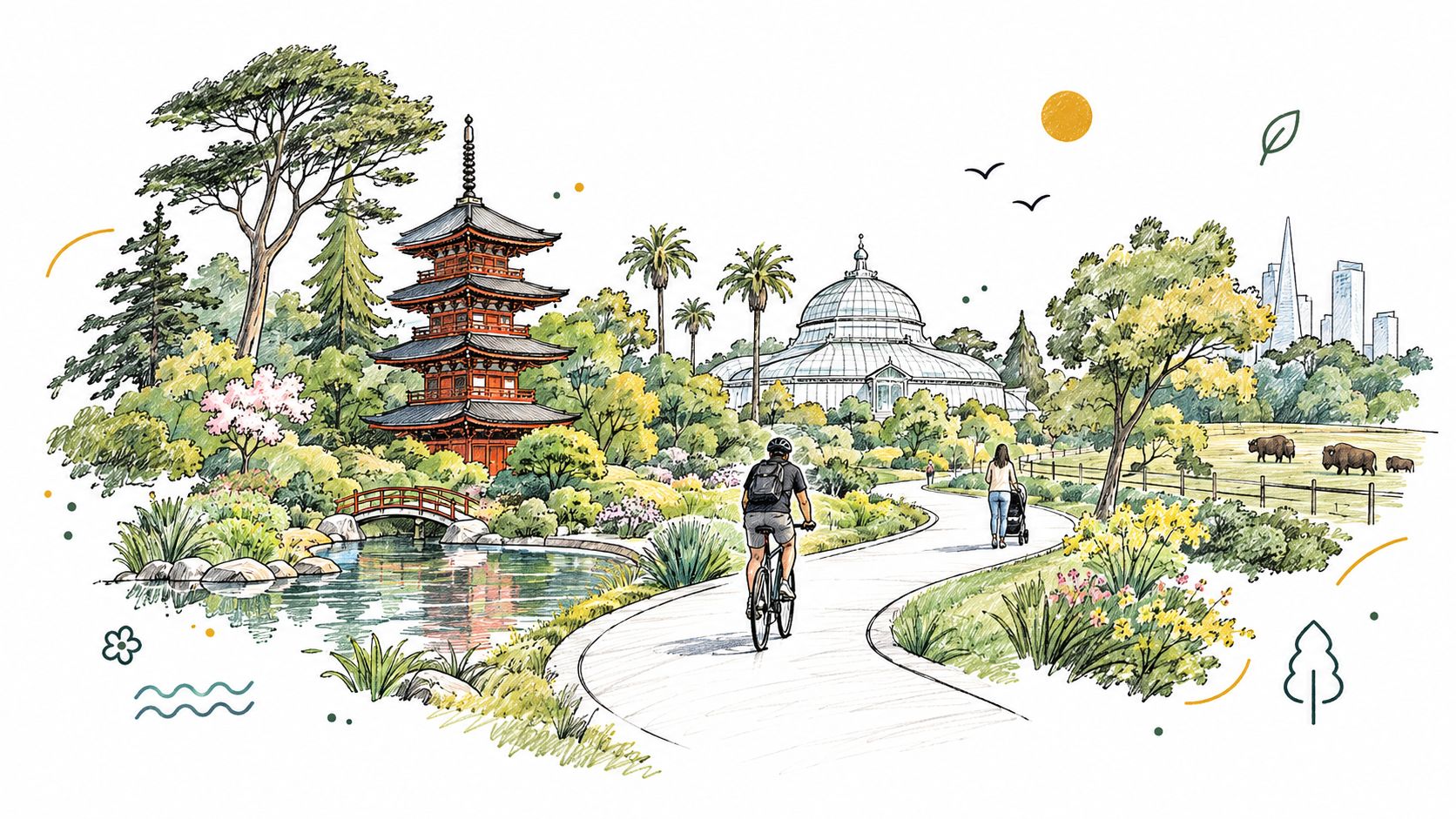
Leave Sonoma County after breakfast, cross the bridge, and Golden Gate Park can be your first real stop without the hard-ticket pressure of Alcatraz or the parking grind of the Wharf. In light traffic, the drive is often manageable for a day trip. The park works best for travelers who want San Francisco to feel spacious for a few hours.
Trying to cover all of it is the mistake.
Golden Gate Park is long, spread out, and better treated like a choose-your-own route. Pick one anchor on the east or middle section, add one short outdoor stop, then keep the rest of the day open for lunch or an early drive back north. That approach suits families, grandparents, and anyone who wants a lower-stress city day.
A practical anchor is the Conservatory of Flowers.
Park area address: Golden Gate Park, San Francisco, CA
Conservatory of Flowers address: 100 John F Kennedy Drive, San Francisco, CA 94118
Hours: Open six days a week, closed Wednesdays. Standard hours are 10 a.m. to 4:30 p.m., with last entry at 4 p.m. It also offers a free day on the first Tuesday of every month (Conservatory of Flowers hours and admission details).
Here is how I would match the park to a Sonoma County day trip:
Two stops is a full park visit. A third stop is optional. After that, you start spending the day relocating instead of enjoying it.
If you have young kids:
Start with the California Academy of Sciences area or a playground stretch, then add a short garden walk. This gives you bathrooms, snack options, and an indoor fallback if the weather turns cool.
If you want a calmer adult day:
Choose the Conservatory of Flowers and one nearby walk or garden. That keeps the pace light and leaves room for a proper lunch in the Richmond or Sunset.
If your group wants outdoor time more than museums:
Use the park for biking, strolling, or a simple west-to-east scenic pass. This is strongest on clear spring and fall days, when the light is better and the wind often feels less punishing than a summer afternoon near the coast.
A few trade-offs matter more here than the usual park description:
- Travel time from Sonoma County: Often around 1.5 to 2 hours, depending on your starting point and bridge traffic.
- Access strategy: Drive in with one destination already chosen. Wandering by car inside the park wastes time.
- Parking reality: Easier than Fisherman's Wharf, but closest-in parking near major attractions fills fast on weekends and sunny afternoons.
- Seasonal timing: Fall and spring usually give the best balance of light, comfort, and walkability. Summer can be gray and chilly.
- Best same-day use: Strong as a half-day core, especially if you want to pair San Francisco with one meal and a relaxed return to Sonoma County.
The main advantage is flexibility. If one stop runs short, the park gives you room to adjust without derailing the day.
The drawback is sprawl. Distances look smaller on a map than they feel with kids, strollers, or older relatives.
For visuals, use greenery, the Conservatory, garden scenes, or people biking through open park roads. Don't use a cable car image here. It breaks trust fast.
4. Cable Cars and Chinatown Historic District
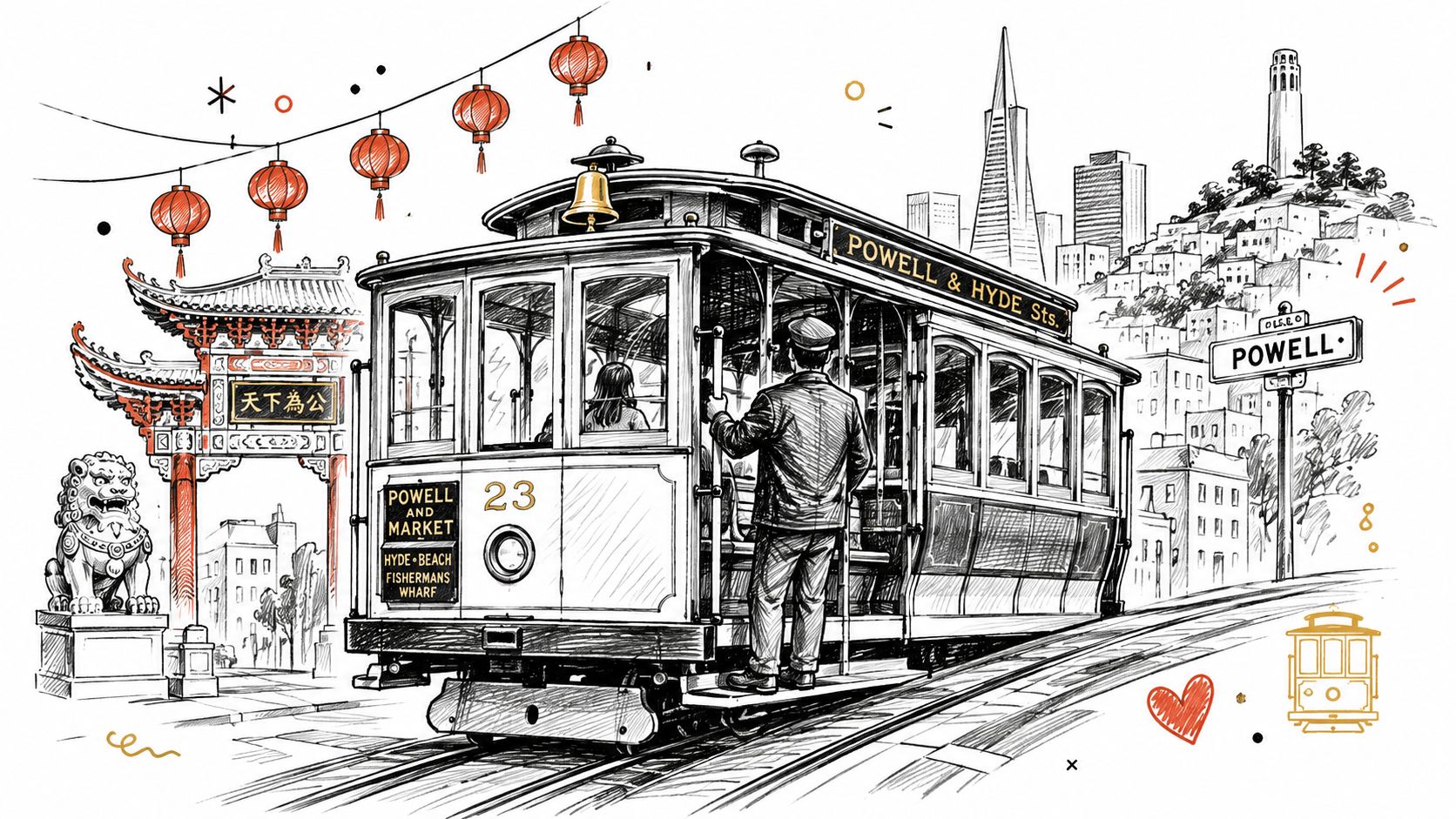
Leave Sonoma County early, cross the bridge before the late-morning backup builds, and this can turn into a very usable city day. Start with the cable car while energy is high, then let Chinatown carry the rest of the plan through lunch, snacks, and a slower walk.
This pairing gives you old San Francisco in a compact stretch. You get motion, noise, steep streets, neon signs, herb shops, roast duck windows, and alleyways that feel completely different from the park-and-museum stops elsewhere in the city.
From Sonoma County, plan on about 1.5 to 2 hours to reach this area, with a longer day if bridge traffic stacks up on the return. The smart move is to park once in or near downtown, Chinatown, or Nob Hill, then stay on foot and use the cable car as part ride, part access tool.
If you only have one full San Francisco day from Sonoma County, this area works best for food-first groups, older kids, and visitors who want atmosphere more than open space.
A practical order helps:
Start on a cable car line that fits your parking plan, not the postcard fantasy of boarding at the busiest turnaround. Riding a real stretch of track is usually more satisfying than standing in a long line for the classic start point.
Then walk Chinatown. Grant Avenue gives you the decorative facades and lanterns. Stockton feels more local, busier, and better for produce markets and everyday street life.
Address: Chinatown is centered around Grant Avenue and Stockton Street in San Francisco.
Hours: Chinatown is a neighborhood rather than a ticketed attraction, so hours depend on the shops and restaurants you choose. Cable car operations also vary by line and service schedule, so check same-day service before you go.
A few trade-offs matter here:
- Best same-day use: Strong for a lunch-centered itinerary, especially if your group wants dim sum, bakery stops, tea, or an early dinner before driving back to Sonoma County.
- Access strategy: Park once and commit to walking. Repositioning the car around this part of the city burns time fast.
- Seasonal timing: Fall and spring are the easiest mix of clear light and comfortable walking. Summer can be cold and gray, even when inland Sonoma feels warm.
- Family reality: Younger kids usually remember the cable car more than the history. Keep the walking loop short and build in a food stop.
- Mobility trade-off: Hills, curbs, and crowded sidewalks can make this tougher than it looks on a map.
One mistake shows up again and again. Visitors board at peak midday, wait too long, then rush Chinatown because the line ate the schedule. An earlier start fixes most of that.
For a realistic Sonoma day trip, I would use this zone in one of three ways: cable car plus dim sum and bakery crawl, cable car plus Chinatown and North Beach lunch, or cable car plus a short culture-focused walk with souvenir shopping for a mixed-age family. It is a strong half-day anchor, but less forgiving if your group dislikes hills, crowds, or waiting.
5. California Academy of Sciences
Leave Sonoma County early and this can be the calmest family stop of the day. Leave late, hit Golden Gate Park near midday, and the same visit starts to feel crowded, expensive, and rushed.
For a one-attraction San Francisco day trip, the Academy earns its keep. It gives children enough hands-on and animal-focused interest to stay engaged, while adults still get a real museum visit instead of pure kid entertainment. It also works well in cold, foggy, or rainy weather, which matters on days when Sonoma feels sunny but the city does not.
It sits inside Golden Gate Park, so the drive is often around 1.5 to 2 hours from Sonoma County, depending on your route and departure time. The smart plan is to treat it as the main event, then add one short park stop before heading back north.
Preview the Academy's aquarium and rainforest dome to judge whether your group will want a quick highlights visit or a true half-day inside.
Address: 55 Music Concourse Drive, San Francisco, CA 94118
Hours: Check current public hours before departure, since schedules and exhibit access can vary.
A few planning calls make a big difference:
If your group likes to read every sign, watch feedings, and linger in the aquarium, give this stop most of the day. If your group moves fast, pair it with a short walk to the Conservatory of Flowers or another nearby Golden Gate Park stop.
The trade-offs are practical.
- Best for: Families, mixed-age groups, grandparents with younger kids, and travelers who want indoor structure instead of a neighborhood wandering day.
- Time reality: Plan on at least a solid half day. Trying to squeeze it into a quick stop usually leads to frustration.
- Access strategy: Arrive early and stay put. Reparking elsewhere in the park or jumping to a distant neighborhood usually wastes more time than visitors expect.
- Seasonal fit: Summer fog and winter rain make this an especially useful pick. On bright spring or fall days, some groups may prefer more outdoor time.
- Main drawback: Peak midday can feel loud and overstimulating, especially for younger children or anyone sensitive to crowds.
I would use it two ways from Sonoma County. For a family day, do the Academy first, eat in or near the park, then add one simple outdoor stop before the drive home. For adults who still want culture but not an all-museum itinerary, use the Academy as the anchor and keep the rest of the day limited to Golden Gate Park rather than trying to cross the city again.
If you are choosing between this and a more scattered sightseeing plan, pick the Academy on weather-risk days or with mixed ages. Pick a neighborhood-based day if your group values street life, food stops, and shorter paid attractions over one longer indoor visit.
6. Fisherman's Wharf and Pier 39
Leave Sonoma County after breakfast, cross the Golden Gate before late-morning traffic builds, and this is one of the simplest San Francisco zones to use well. Fisherman's Wharf works for visitors who want classic bay scenery without a complicated plan.
It is crowded. It is commercial. It also solves a real day-trip problem. Families can keep everyone entertained on foot, grandparents do not need long hills, and first-time visitors get sea lions, Alcatraz views, street activity, and easy food in one compact stretch.
The trade-off is quality versus convenience. The waterfront is fun, but some restaurants are priced for location first. I usually treat the Wharf as a targeted half-day stop, then decide whether to head home early to Sonoma County or add one nearby stop only if the group still has energy.
A practical anchor here is Aquarium of the Bay.
Aquarium of the Bay address: The Embarcadero & Beach St., San Francisco, CA 94133
Hours: 10:00 AM to 5:00 PM, with a Christmas Eve exception of 10:00 AM to 3:00 PM and Christmas Day closure (Aquarium of the Bay visit information).
Here is the cleanest way to use this area on a day trip from Sonoma County:
- Arrive earlier than you think. Late morning to mid-afternoon is the busiest window.
- Park once and stay in the Wharf and Pier 39 zone.
- Visit the sea lions first if children are excited about them.
- Eat an early lunch or a late lunch to avoid the worst restaurant lines.
- Leave room for weather. Wind off the bay can make the waterfront feel colder than inland neighborhoods.
Fisherman's Wharf is strongest when convenience is the goal. It is weaker if your group wants a quieter, more local San Francisco feel.
Season matters here. Clear spring and fall days make the bay views much better, while summer fog can flatten the scenery but still works fine for families who mainly want an easy outing. Winter can be a good fit on dry days because the area is straightforward, but rain takes some of the fun out of lingering outdoors.
For a family-focused Sonoma County day, I would arrive by late morning, do Pier 39 and the sea lions, add the aquarium if the weather is cold or the kids need structure, grab lunch, and start the drive back before late-afternoon traffic thickens. For adults, the better version is shorter. Walk the waterfront, get a crab or seafood lunch from a place you choose carefully, enjoy the bay views, and move on rather than forcing a full-day schedule here.
For images, use sea lions, the pier frontage, waterfront signage, or bay-facing family scenes. Match the H2 directly.
7. Museum of Modern Art
Leave Sonoma after breakfast, reach SoMa around late morning, and you can spend the middle of the day indoors while downtown traffic and weather do what they do. SFMOMA fits that schedule well. It gives a San Francisco day trip real substance without forcing a long outdoor walk or a scattered, cross-city plan.
This stop works best for adults, teens, and anyone in the group who wants a clear cultural anchor. Families with very young kids can still do it, but the visit usually goes better if you set a time limit and build in a food stop soon after.
Address: 151 Third Street, San Francisco, CA 94103
Hours: Monday to Tuesday 10 a.m. to 5 p.m., Wednesday closed, Thursday noon to 8 p.m., Friday to Sunday 10 a.m. to 5 p.m. (SFMOMA visitor information)
The access strategy matters more here than at the waterfront. From Sonoma County, driving is straightforward, but parking in this part of the city adds cost and can slow the day if you improvise. If I were planning this as a one-stop culture outing, I would reserve parking nearby or arrive ready to use a garage and walk a few blocks. If your group is comfortable with transit, the museum's location near BART keeps the final approach simple.
SFMOMA is strongest as a planned indoor anchor, not as a casual add-on after a long morning elsewhere.
The trade-off is easy to define. You get a polished museum, strong architecture, and a visit you can shape to your energy level. You give up bay views, open-air space, and some of the instant San Francisco postcard feel that first-time visitors often want.
A few practical ways to use it on a Sonoma County day trip:
- Rainy or cold-weather pick: One of the safest choices when outdoor plans are likely to disappoint.
- Best visit length: About two to three hours for a satisfying stop without museum fatigue.
- Good pairing: Lunch, coffee, or an early dinner in SoMa or along a short downtown walk.
- Less ideal pairing: Another large museum on the same day, unless everyone is specifically there for art.
Seasonally, this section of the city is useful year-round because the museum removes much of the weather risk. Summer fog matters less here than it does at the bridge or waterfront. Winter can work well for a Sonoma-to-San Francisco run if roads are clear and your group wants a day that feels urban, calm, and structured.
For images, use the museum exterior, a gallery space, or recognizable installation areas. The image should read as modern art immediately.
8. Coit Tower and Telegraph Hill
Leave Sonoma County after breakfast, reach the northeast waterfront by late morning, and Coit Tower can give you one of the city's strongest view stops before lunch. The catch is simple. This part of San Francisco rewards groups that are comfortable with hills, stairs, and a little improvisation.
Coit Tower works best as a half-day zone, not a quick photo stop squeezed between distant neighborhoods. From Sonoma County, expect roughly 1.5 to 2 hours of travel depending on traffic and bridge conditions. Once you arrive, the decision is access. Drive up for the shortest visit, or park lower down near North Beach or the Embarcadero and turn Telegraph Hill into the experience.
Address: 1 Telegraph Hill Blvd, San Francisco, CA 94133
Hours: Check current public access hours before visiting, since tower interior access can vary.
What makes this stop different from the Wharf or downtown museums is the approach. Parrots overhead, gardens tucked into stairways, narrow residential stretches, and sudden bay views give the hill its identity. The tower is the landmark people recognize. The walk is what people remember.
For a Sonoma day trip, I would only choose Coit Tower if your group wants a view with character and is still fresh enough to handle the climb.
A few smart ways to use it:
- Culture and lunch itinerary: Park near North Beach, eat first, then walk uphill at an unhurried pace.
- Family version: Start with the tower access road if younger kids are low on energy, then add a short stair walk only if the mood is good.
- Outdoor version: Pair Telegraph Hill with a waterfront walk instead of another indoor attraction.
- Skip-it condition: Anyone with mobility concerns, stroller challenges, or a low tolerance for parking friction may have a better day elsewhere.
Season matters here more than many visitors expect. Clear fall days usually give the sharpest views. Summer fog can flatten the skyline and bay, especially if you arrive early. Winter can still work well from Sonoma County if rain is not in the forecast, but wet stairways make the area less appealing.
The trade-off is fair and easy to read. You get one of the more atmospheric hilltop visits in San Francisco, with older neighborhood texture that feels distinctly local. You give up convenience. Parking is tight, the slopes are real, and the visit is less forgiving if your group is tired by midday.
For images, choose a tower-on-the-hill shot or a view outward from Telegraph Hill. Avoid generic skyline-only photos that leave out the actual destination.
9. The Presidio and Golden Gate Views
Leave Sonoma County after breakfast, and the Presidio is one of the few San Francisco stops that still feels calm when you arrive. In normal traffic, plan on about 1.5 to 2 hours. That makes it a strong choice for a day trip built around open space, bridge views, and shorter walking options instead of dense city logistics.
I use the Presidio for groups that want San Francisco scenery without committing the whole day to downtown parking, hills, and crowds. It also works well when the plan needs flexibility. If fog rolls in, you can shift from overlooks to a lower trail, a lawn stop, or a relaxed meal break and still salvage the outing.
If you want to extend the city day into a broader Bay Area trip later, Sonoma County Navigator also has a guide to best weekend getaways from San Francisco.
How to use the Presidio well
Address: Presidio of San Francisco, San Francisco, CA 94129
Hours: Hours vary by site, trail, and building within the Presidio. Check the specific stop you want before leaving.
Start by deciding what kind of day you want. The Presidio is broad enough that a vague plan leads to wasted time in the car.
For a Sonoma County day trip, these are the versions that usually work best:
- Outdoor-first itinerary: Drive in, choose one main viewpoint, then add one easy trail or shoreline walk.
- Family version: Keep it simple with a scenic stop, room for kids to move, and snacks packed from home.
- Photo and view day: Aim for bridge overlooks later in the morning or early afternoon, when visibility is often better than at cold, foggy daybreak.
- Light culture mix: Add a historic building or military-history stop, but keep expectations centered on the setting rather than museum-style depth.
The Presidio works best when you treat it as a choose-your-own route, not a single attraction.
The main trade-off is spread. That space is exactly why many visitors like it, but it also means you need to choose access points on purpose. Groups that want concentrated action, shopping, or a long list of indoor stops may find the area too quiet.
Food takes a little planning too. Bring water and something easy to eat, or decide on a meal stop before you arrive. Waiting to improvise can turn a relaxed park visit into extra driving and a hungry group.
Season matters here. Fall often brings the clearest bridge views. Summer can be beautiful, but fog can erase the payoff at exposed overlooks. Winter days can be excellent from Sonoma County when skies are clear, though wind can make longer stops less comfortable.
For visuals, use coastal overlooks, cypress-lined trails, bridge views, or broad frames that clearly show this is a park setting rather than downtown.
10. Ferry Building Marketplace and the Embarcadero
Leave Sonoma County after the main commute, park once, and let the rest of the day happen on foot. That is the advantage here.
For a San Francisco day trip, the Ferry Building area is one of the easiest zones to use well because the outing can stay compact. From Sonoma County, expect roughly 1.5 to 2 hours depending on traffic and whether you drive straight in or time your arrival for a garage near the waterfront. The payoff is a day with less hill climbing, fewer transit decisions, and plenty of built-in food options.
The setting does two jobs at once. Inside, the marketplace gives you coffee, pastries, lunch counters, and specialty food shops. Outside, the Embarcadero gives you a flat waterfront walk with bay views, ferry traffic, and room to stretch the day without turning it into a major logistics project.
Address: 1 Ferry Building, San Francisco, CA 94111
Hours: Marketplace vendors keep separate hours. Check the businesses you care about before you leave Sonoma County.
A good plan here starts with your priority:
Come for lunch if food is the point. Come earlier if the waterfront walk matters just as much.
If I were mapping this as a realistic Sonoma day trip, I would use one of these versions:
Quick family outing
Start with a snack or early lunch in the building, then walk part of the Embarcadero while kids get some movement and adults get the postcard bay setting. This works well on cooler days because you can move between indoor and outdoor time without much friction.
Food-centered city day
Use the Ferry Building as the meal anchor, then keep the rest of the itinerary nearby. Pair it with downtown, North Beach, or SFMOMA if you want one added stop instead of crisscrossing the city. Sonoma County Navigator also has more Bay Area outing ideas in its guide to best day trips from San Francisco.
Low-stress culture mix
Choose the Ferry Building if your group wants San Francisco atmosphere without committing to a long museum day or a heavily scheduled attraction. It gives you a strong sense of place, but the pace stays flexible.
The trade-off is depth. This area is polished, scenic, and easy to use, but it can feel curated compared with neighborhoods where the character comes more from street life than from a central landmark. That is fine for a day trip. It matters if you are looking for a stronger local-neighborhood feel.
Timing changes the experience. Midday is strongest for food. Clear fall days usually give the nicest light on the bay and a more comfortable waterfront walk. Summer mornings can be gray and breezy, while winter can be excellent if skies cooperate.
For photos, prioritize the clock tower, interior market scenes, and the promenade with ferries or the Bay Bridge in view. Those frames read immediately as Ferry Building, not generic downtown waterfront.
Top 10 San Francisco Attractions Comparison
| Attraction | Ease of visit (🔄 Complexity) | Time & cost (⚡ Efficiency) | Experience quality (⭐) | Best for (💡) | Top advantage (📊) |
|---|---|---|---|---|---|
| Golden Gate Bridge | Low, open 24/7 with pedestrian/bike lanes; limited parking; windy/fog possible | ⚡ Short visit (1–2 hr); free to walk; vehicle toll $8.05 | ⭐⭐⭐⭐⭐, iconic vistas | Photography, casual walks, cycling | World‑famous panoramic views and easy pedestrian access |
| Alcatraz Island & Penitentiary | Moderate, ferry required; timed tickets; hilly island with stairs; limited accessibility | ⚡ Multi‑hour (≈3 hr); paid ticket (~$42); advance booking essential | ⭐⭐⭐⭐, immersive historic experience | History buffs, guided audio tours, education | Authentic preserved prison and award‑winning audio interpretation |
| Golden Gate Park | Moderate, very large; accessible paved paths but needs planning to see highlights | ⚡ Flexible (2–6+ hrs); main park free; museums/gardens charge admission | ⭐⭐⭐⭐, varied natural and cultural attractions | Families, nature lovers, museum visits | Diverse attractions (gardens, museums, lakes) in one urban park |
| Cable Cars & Chinatown Historic District | Moderate, unique historic operation; long lines; cable cars not wheelchair accessible | ⚡ Short rides but waits can be long; $8 per ride or $13 day pass | ⭐⭐⭐⭐, cultural novelty and city character | Short iconic rides, cultural immersion, shopping/dining | Historic transit experience plus vibrant Chinatown atmosphere |
| California Academy of Sciences | Low, straightforward museum visit with full accessibility; timed entry advised | ⚡ 3–4 hrs; higher admission ($35 adults); planetarium shows may sell out | ⭐⭐⭐⭐⭐, top‑tier science, aquarium & planetarium | Families, science enthusiasts, interactive learning | Combination museum/aquarium/planetarium with strong conservation mission |
| Fisherman's Wharf & Pier 39 | Low, open waterfront area; very crowded; parking difficult | ⚡ Flexible (1–4 hrs); free to stroll; food and parking costly | ⭐⭐⭐, lively tourist waterfront | Casual sightseeing, seafood dining, family outings | Active waterfront with sea lion colony and maritime history |
| Museum of Modern Art (SFMOMA) | Low, ticketed museum, fully accessible, urban location | ⚡ 2–3 hrs; moderate admission ($25); can be busy evenings/weekends | ⭐⭐⭐⭐, world‑class modern & contemporary collections | Art lovers, modern/contemporary exhibitions | Extensive modern art collection and free rooftop garden access |
| Coit Tower & Telegraph Hill | Moderate, short visit but involves stairs; limited wheelchair access to tower | ⚡ 1–2 hrs; low admission ($8); limited parking | ⭐⭐⭐⭐, panoramic views + historic WPA murals | Panoramic photography, mural viewing, neighborhood walks | Affordable citywide views and notable 1930s murals |
| The Presidio & Golden Gate Views | Moderate, expansive park; some trails strenuous; parking limited at hotspots | ⚡ Half‑day to full‑day flexible; park access free; select museums charge | ⭐⭐⭐⭐, scenic trails and quieter viewpoints | Hiking, photography, quieter bridge viewpoints | Large natural and historic area with excellent Golden Gate vistas |
| Ferry Building Marketplace & Embarcadero | Low, easy by transit; farmers market on set days; good pedestrian access | ⚡ 1–2 hrs; free entry; food and ferry fares extra | ⭐⭐⭐⭐, high‑quality food and local producers | Foodies, market shoppers, ferry day trips | Premier artisanal food market and waterfront transport hub |
Choose One San Francisco Zone and Make the Day Count
The most successful San Francisco day trips from Sonoma County have a center of gravity. Pick a zone, commit to it, and let the day breathe a little. That's how you avoid the classic mistake of spending more time crossing the city than enjoying it.
If you want the iconic outdoor version of San Francisco, pair the Golden Gate Bridge with the Presidio. That gives you the skyline-and-bay payoff people come for, but with enough space to make the day pleasant instead of frantic. It's a strong fit for photographers, walkers, and anyone who'd rather be outside than in line.
If your group wants a family-friendly mix of open space and a major attraction, combine Golden Gate Park with the California Academy of Sciences. That pairing works because the park gives you room to reset after an indoor visit. You can add the Conservatory of Flowers if you want a second stop without changing neighborhoods.
If you've got first-time visitors or kids who want obvious San Francisco energy, Fisherman's Wharf and Alcatraz make sense together. Just be honest about pace. Alcatraz takes planning and time, and the Wharf gets crowded, so this combo works best when you accept that it's your full day, not the first half of a much larger city tour.
For a food-and-culture day, the Ferry Building fits naturally with downtown or a museum stop like SFMOMA. That route is efficient, less weather-dependent, and easier to manage if your group wants a lighter walking day.
A few logistics matter every time. Check current hours before leaving, especially for museums, ferries, and ticketed attractions. Allow extra time beyond the Sonoma County drive estimate because city parking, bridge slowdowns, and weekend crowds can eat into your schedule. Use transit or park-once strategies in the denser neighborhoods where moving the car becomes a hassle. Dress for wind and fog even if Sonoma feels warm at breakfast. Verify seasonal conditions and ticket availability before you go, especially for Alcatraz and high-traffic weekends.
San Francisco rewards selective planning. You don't need to see everything in one shot. You need one well-built day.
If you're planning the next outing after this one, Sonoma County Navigator is a useful place to keep browsing for day trips and weekend ideas within a manageable drive. The best trips usually aren't the ones where you try to fit in every landmark. They're the ones where the route works.
Sign up for Sonoma County Navigator
Discover Sonoma County! Latest News, places to play, stay, eat, live, shop, learn and more!
No spam. Unsubscribe anytime.