


A true one-day visit from Sonoma County is most practical by air, while driving takes approximately 12 to 13 hours and is better treated as a multi-day trip. With an early arrival, one major attraction, a nearby lunch, and one carefully chosen afternoon area, you can build a useful San Diego day without pretending the entire city fits into it.
Make the Long Trip Work in One San Diego Day
You're leaving Sonoma County before sunrise, watching the airport clock, and wondering whether a single day in San Diego can justify the effort. The answer depends less on how many sights you can name than on how tightly you control distance, parking, and your departure time.
Driving from Sonoma County takes approximately 12 to 13 hours, so it's a poor match for a true same-day sightseeing trip. Treat the drive as part of a longer Southern California trip, with time for an overnight stop or several San Diego days. Flying is more practical for one day, but the airport still adds parking or rideshare planning, fuel considerations, security time, ground transportation, and possible toll decisions after you land.
San Diego itself supports highly concentrated sightseeing. The destination recorded 14.6 million total day visitors in calendar year 2025, including 10.8 million day visitors excluding Mexico, and direct visitor spending reached $14.4 billion. Those figures, reported in San Diego Tourism Authority's 2025 fast facts, reflect a mature tourism economy with attractions spread across downtown, Balboa Park, the waterfront, beaches, and Coronado.
The most workable plan is a focused route:
- Morning: Land, collect a bag if needed, and head toward one principal stop.
- Late morning: Choose a cultural or harbor attraction.
- Lunch: Eat nearby rather than crossing the city.
- Afternoon: Pick Coronado, Balboa Park, La Jolla, or Torrey Pines.
- Evening: Depart, or stay overnight if the return journey would be unsafe or exhausting.
Sonoma County Navigator is a practical starting point for trips within a day's drive or less of Sonoma County. San Diego needs more careful scheduling than a typical regional outing, so use the itinerary below as a set of route options, not a promise to visit every listed attraction. For guided sightseeing ideas once you arrive, you can also book with Tiki Time Bay Tours.
1. USS Midway Museum
The USS Midway is the strongest opening stop for travelers who want a memorable San Diego experience without spending the day moving between distant neighborhoods. The permanently docked aircraft carrier sits on the downtown waterfront, close to the airport and other harbor sights, so it works especially well after an early flight.
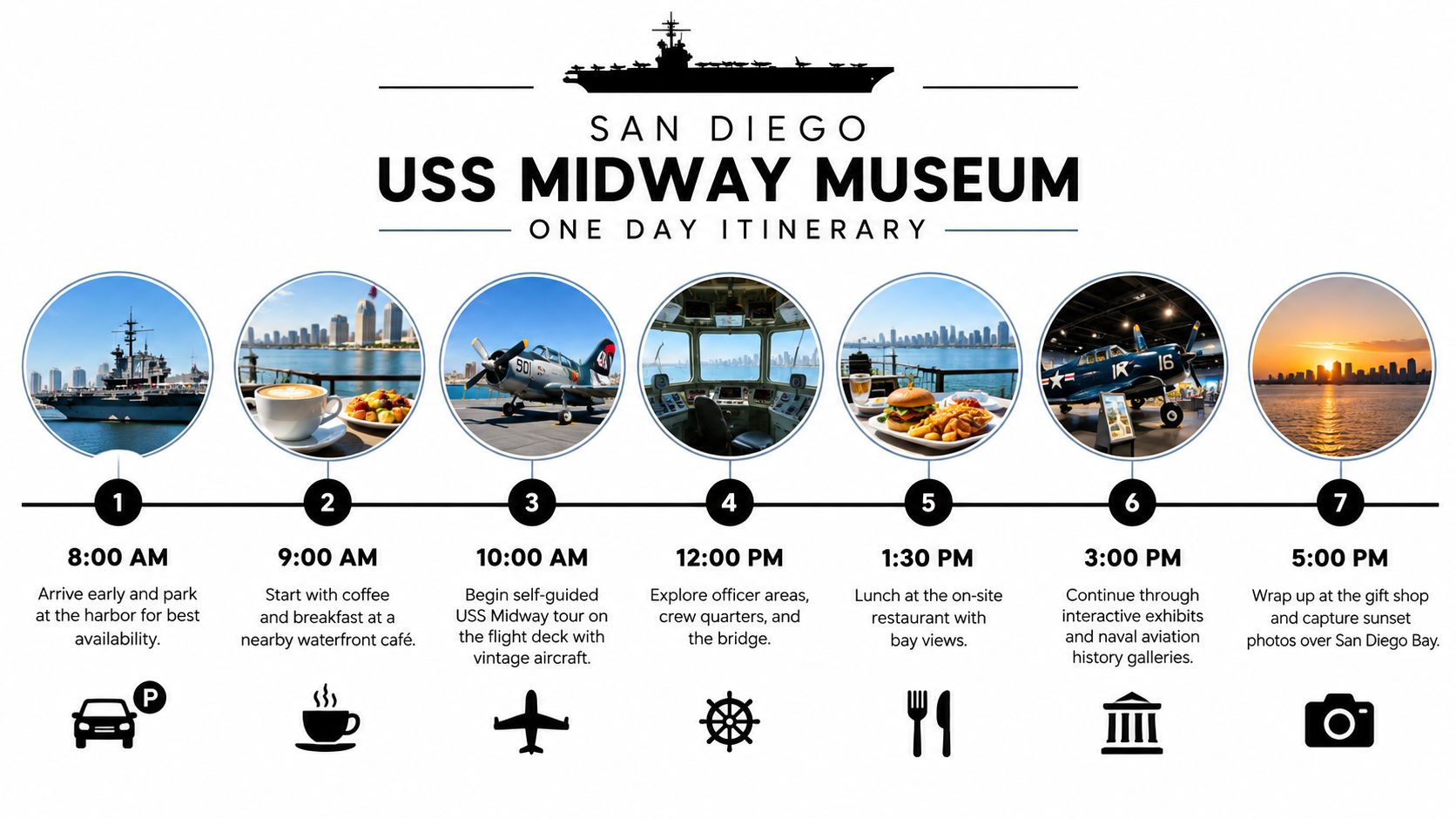
The self-guided visit moves through the flight deck, aircraft displays, hangar spaces, bridge, crew areas, and operational parts of the ship. You'll climb stairs, walk narrow passages, and spend time outside, so comfortable shoes matter more here than they do on a conventional museum visit. The ship offers the kind of physical scale that makes naval history easier to understand, particularly for families with older children and travelers who prefer exhibits they can enter and explore.
Plan roughly two and a half to three hours for a thorough visit, based on the attraction's recommended experience window in the supplied planning information. The museum's current visitor details should be checked before departure because admission, hours, and special access can change.
How to fit the Midway into a flight day
Arrive early enough to leave room for airport delays and ground transportation. Weekday mornings generally offer a calmer experience than busy weekend periods, and early arrival can also make nearby parking easier. The waterfront location is useful, but parking can become a time sink if you arrive without a backup plan.
Bring water and sunscreen for the flight deck. San Diego's mild reputation doesn't remove the need for sun protection when you're walking across an exposed carrier deck.
Practical rule: Give the Midway a fixed end time. If you're still exploring when lunch begins, finish the section you're in and move on rather than allowing one museum to consume the entire day.
From the Midway, stay in the harbor district for lunch or a short waterfront walk. Don't combine this stop with La Jolla and Torrey Pines unless you're comfortable cutting the museum visit short. The trade-off is clear, the Midway gives you a concentrated cultural experience, while the coastal route gives you scenery and outdoor time.
2. Balboa Park and San Diego Zoo
Balboa Park is the most versatile choice for a one-day San Diego itinerary, but it's also the easiest place to overbook. The City of San Diego says about 14 million visitors come to the park each year, and the park was set aside as a public park on May 26, 1868, covering 1,400 acres, according to Balboa Park information from San Diego Tourism Authority.
The grounds are open 24 hours a day, seven days a week, and there's no gate or admission fee to enter the park itself. The main address is 1549 El Prado, San Diego, CA 92101. The official visitor center at that address operates Monday through Sunday, 9:30 a.m. to 4:30 p.m., as outlined in the Balboa Park visitor FAQs. Individual museums and attractions set their own hours and admission policies, so a free park visit doesn't mean every indoor attraction is free.
Choose the zoo or the park
The San Diego Zoo is at 2920 Zoo Drive, San Diego, CA 92101, inside Balboa Park. Its live schedule currently lists hours of 9:00 a.m. to 6:00 p.m., while the zoo's general fact information notes daily operation with seasonal extensions. Check the official San Diego Zoo schedule before leaving, especially when your flight schedule is tight.
The zoo's official help guidance recommends budgeting four to six hours to experience it. That makes a complete zoo visit incompatible with a thorough museum-and-gardens day. If the zoo is your priority, commit to it and use the rest of the afternoon for a short walk through the central park area. If culture and architecture matter more, skip the zoo and select one museum, a garden area, and the Spanish Colonial Revival buildings around El Prado.
Rapid 215 or Route 7 can connect downtown and Balboa Park in 15 minutes or less, according to the supplied tourism data. That makes a car-free plan realistic when you're staying downtown or arriving by rideshare.
- Families: Choose the zoo, then keep the evening local.
- Museum visitors: Select one museum before arrival and map the route.
- First-time visitors: Walk the central park areas and avoid collecting too many indoor stops.
- Drivers: Park once and stay in the park rather than moving between lots.
A positive visitor review often depends on pacing. People who expect to see everything tend to leave frustrated, while visitors who choose one anchor usually have time to notice the architecture, gardens, and shaded paths.
3. Coronado Island and Hotel del Coronado
Coronado works best when your priority is a relaxed coastal afternoon rather than a long list of attractions. The island combines beach time, Orange Avenue shops, restaurants, waterfront views, and the historic Hotel del Coronado. It's a good counterbalance to a museum-heavy morning, but traffic and parking can turn a short visit into a frustrating one.
The Hotel del Coronado is at 1500 Orange Ave, Coronado, CA 92118. For an overnight stay, check-in begins at 4:00 p.m. and check-out is by 11:00 a.m. The property is about 15 minutes from San Diego International Airport, according to the Hotel del Coronado FAQ. Those times matter if you're trying to convert a day trip into a brief overnight stay. A late arrival may leave little time to use the resort, while an early departure can make the next morning feel rushed.
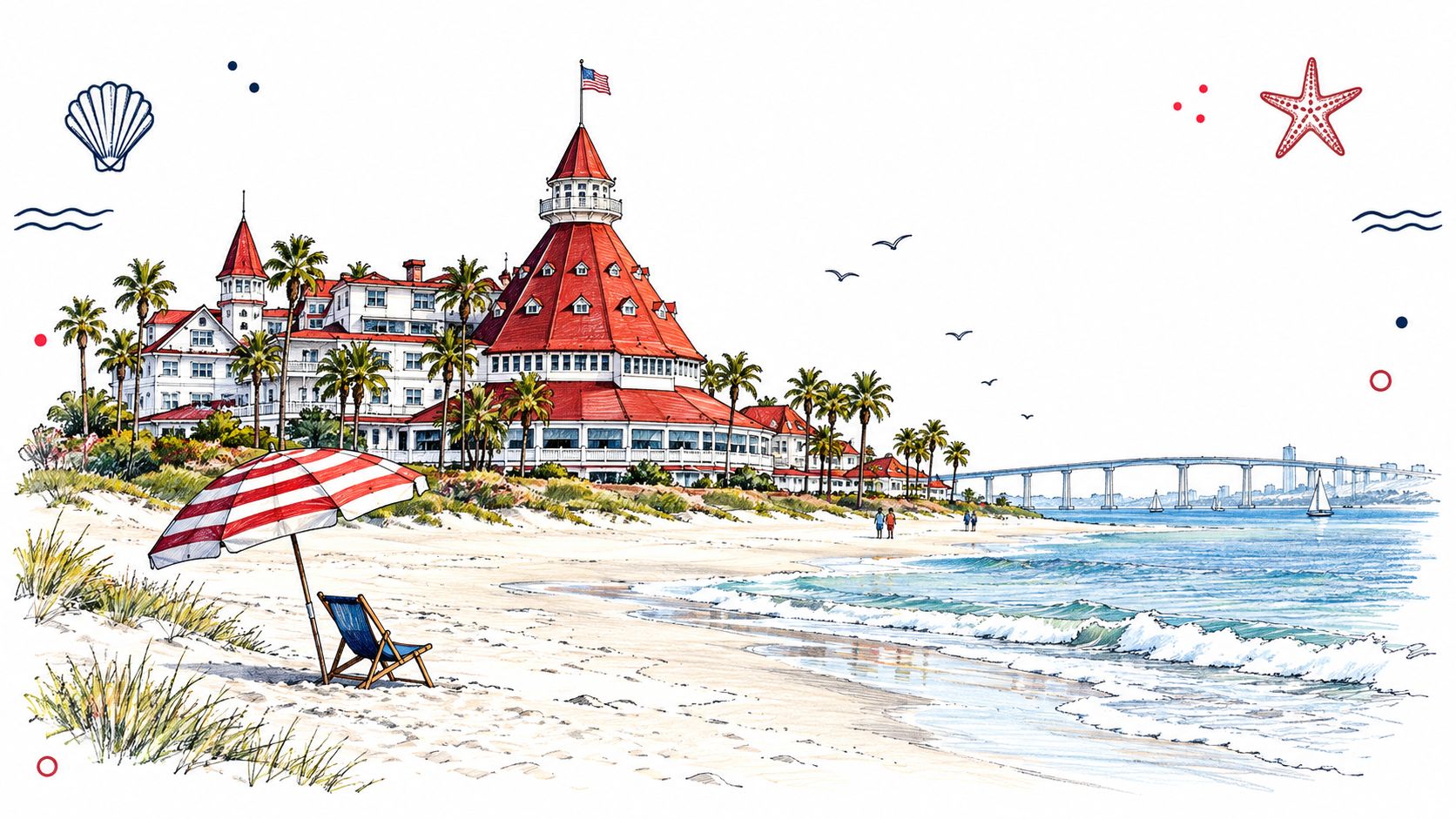
You don't need to stay at the hotel to appreciate its public-facing architecture and beach setting, but respect posted access rules and private areas. Walk the nearby beach, explore Orange Avenue, and allow time for a meal. A three-to-four-hour visit is a sensible planning window for the island, beach, and village areas, but the exact experience depends on traffic, events, and how long you spend by the water.
Driving, ferry, and parking trade-offs
Driving gives you more control over beach gear and luggage, but it exposes you to bridge traffic and limited parking. The ferry from downtown can make the crossing part of the experience, though schedules and fares should be confirmed before you rely on it. Parking near Coronado Ferry Landing may be useful when spaces are available, but don't assume a convenient space will appear during a busy period.
Arrive in the morning for a quieter beach experience, or use Coronado as a late-afternoon choice after a downtown or harbor stop. Dining early can help you avoid the busiest dinner period, but reserve ahead if you have a fixed departure.
Coronado is the better choice when you want to slow down. It's the wrong choice if you're already late and still hoping to add La Jolla.
The island's visitor reviews tend to reflect that same split. Travelers who want a scenic walk, historic architecture, and an easy beach stop usually find the area rewarding. Travelers expecting a frictionless drive, abundant parking, and a full attraction schedule may find the logistics less relaxing.
4. La Jolla Cove and Coastal Exploration
La Jolla Cove is the right afternoon choice for travelers who want cliffs, ocean views, village streets, and the possibility of seeing marine life. It's also one of the least forgiving options for a late start. Parking near the cove can take longer than expected, and water conditions can change, so build the plan around walking and observation rather than assuming you'll swim or snorkel.
Plan two to three hours for the cove and village. Arriving around 7:30 to 8:00 a.m. can improve your chance of finding parking and enjoying the shoreline before crowds build, but that timing makes La Jolla a morning anchor rather than an easy add-on after a long museum visit. Mid-week visits are generally more manageable than weekends.
The cove area offers coastal parks, sea cliffs, nearby viewpoints, galleries, and dining around Prospect Street. Children's Pool and Sunny Jim Sea Cave can extend the walk, but don't treat every nearby feature as a mandatory stop. A short route with time to watch the water will feel better than a rushed circuit.
Keep the water plan flexible
Bring sunscreen, a hat, and water. If you're planning snorkeling, diving, or swimming, check current conditions before entering the water and use local rental operators when you need equipment. The supplied planning notes reference local snorkel rental options, but prices and availability change, so verify them directly.
A casual lunch around Prospect Street can keep the day moving, especially when you don't want a formal meal. Reserve only if a specific restaurant is central to your trip, because a fixed booking can create pressure when coastal parking or traffic runs late.
Visitors often praise La Jolla for scenery and wildlife viewing, but the experience isn't a guaranteed encounter or a controlled attraction. Seals and sea lions may be visible, distant, or absent from the exact place you expected. That uncertainty is part of the appeal, provided you plan the stop as coastal exploration rather than a promised animal show.
For a Sonoma County traveler arriving by air, La Jolla makes more sense with a rental car or a carefully timed rideshare budget. It pairs naturally with Torrey Pines, but not with Coronado, the Midway, and Balboa Park on the same day.
5. Torrey Pines State Natural Reserve
Torrey Pines State Natural Reserve is the most demanding option in this list because it rewards an early start, comfortable walking, and realistic expectations about heat and trail conditions. The protected coastal terrain features bluffs, ocean overlooks, native Torrey pines, and hiking routes north of La Jolla. It's a strong fit for photographers and outdoor travelers who'd rather spend their limited San Diego time on a trail than inside a museum.
Start at the visitor center before choosing a route. Staff and posted information can help you understand current conditions, closures, and which trail matches your time and ability. The reserve can be added to La Jolla, but only if you accept that both stops will be selective rather than all-encompassing.
Build the hike around one trail
The supplied planning notes identify the Guy Fleming Trail as a 2.2-mile route with strong views and moderate difficulty. That figure comes from the provided reserve planning information, but current trail conditions can affect the practical experience. Don't choose a route solely for its distance. Elevation, sun exposure, footing, and the time needed to reach the trailhead all matter.
Allow two to three hours for hiking and exploration, and bring water, sun protection, and shoes with reliable grip. Early morning is preferable for cooler temperatures and better parking odds. Mid-week visits generally provide a calmer trail experience than weekends.
- Before hiking: Check official conditions and closures.
- At the visitor center: Ask which route fits your available time.
- On exposed sections: Carry water and protect yourself from the sun.
- For families: Choose the trail based on children's stamina, not the map alone.
- For photographers: Leave room for stops at overlooks instead of racing to the endpoint.
A reviewer who enjoys dramatic coastlines may rate Torrey Pines as a highlight even after a short hike. Someone expecting a flat beach walk may find the terrain more strenuous than anticipated. That difference is why the reserve deserves its own afternoon block.
For more California park planning ideas from Sonoma County, see California state parks planning guidance. Keep the reserve paired with La Jolla and avoid adding downtown or Coronado unless your day begins and ends near the coast.
6. San Diego Zoo Safari Park
The San Diego Zoo Safari Park belongs on a dedicated wildlife day, not on a rushed city itinerary. It's in the San Diego backcountry, away from downtown, Balboa Park, Coronado, and the central coast. The setting allows animals to occupy large, naturalistic habitats, while visitors explore walking routes, scheduled talks, tram experiences, and other wildlife areas.
The supplied planning information recommends four to five hours for a full visit. That window doesn't include the trip from the airport, hotel, or downtown, so the Safari Park can easily become the only major attraction of your day. That isn't a weakness. It's the correct way to experience a large wildlife facility without reducing it to a quick photo stop.
Make the park the purpose of the trip
Arrive near opening to reduce the chance of long waits for popular experiences. An early aerial tram ride can help you orient yourself before the park becomes busier, while keeper talks and scheduled programs are worth checking as soon as you enter. Bring water, sunscreen, and comfortable walking shoes because the experience combines outdoor exposure with substantial walking.
Families should decide in advance whether the priority is the tram, walking trails, animal encounters, or educational programming. Adults traveling without children may prefer a slower route through the habitats and conservation displays rather than trying to collect every experience.
The Safari Park works when you give it the day. It doesn't work as a detour between Balboa Park and the coast.
Visitor reviews commonly distinguish the park from a traditional urban zoo because the spaces feel expansive and the day involves more movement. That can be a major advantage for wildlife enthusiasts, but it also means visitors should check heat, mobility, and transportation needs before committing.
A combo ticket with the San Diego Zoo may be useful for a longer trip, but it's not a reason to force both parks into one day. If you're flying from Sonoma County for a short stay, consider an overnight plan near the backcountry or reserve the Safari Park for a separate visit during a multi-day Southern California trip.
7. Gaslamp Quarter Historic District and San Diego Downtown
Downtown San Diego is the easiest area to use when your flight schedule is uncertain. The Gaslamp Quarter, waterfront, modern downtown attractions, restaurants, and the USS Midway can form a compact urban day, especially if you're staying downtown or using rideshare instead of hunting for parking at several separate locations.
The Gaslamp Quarter's restored historic buildings now hold restaurants, bars, shops, galleries, and evening venues. The district is best understood on foot, with time for side streets rather than a quick pass along the main corridor. A walking tour can add context to the architecture and local history, while the waterfront provides a change of pace after the busier entertainment district.
A practical downtown sequence
Start with the waterfront and the Midway if naval history appeals to you. Continue toward the Gaslamp for lunch or an early dinner, then use the remaining time for a short architectural walk. If you're traveling with children, keep the route compact and avoid turning every restaurant or shop into a planned stop.
Parking in a garage or paid lot may save time compared with circling for street spaces. Reserve dinner in advance when your schedule depends on a particular restaurant, especially during a busy evening. The Quarter can feel lively and convenient, but it also becomes noisier and more crowded as the evening develops.
- History focus: Add the Heritage Museum or a guided architectural walk.
- Food focus: Choose one reservation and keep the rest of the route flexible.
- Harbor focus: Walk the waterfront and stop at the Midway rather than crossing to another coastal neighborhood.
- Transit focus: Stay near downtown hotels and use rideshare or public transit for short connections.
For historical context before visiting, read the history of Mission San Diego de Alcalá. It broadens the regional story beyond the Gaslamp's Victorian-era streets without requiring another attraction on the same day.
Visitor reviews vary by timing. Daytime visitors often appreciate the architecture, restaurants, and walkability. Evening visitors may enjoy the energy but should expect more noise, crowds, and a less relaxed pace. Downtown is a strong fallback when weather, traffic, or a delayed flight makes a distant coastal plan unrealistic.
San Diego 1-Day: 7-Stop Comparison
| Attraction | Visitor effort 🔄 | Cost & time ⚡ | Experience quality ⭐ | Ideal for 💡 | Key advantages 📊 |
|---|---|---|---|---|---|
| USS Midway Museum | Moderate, multi‑deck self‑guided tour with many stairs; elevators/wheelchair routes available | Admission ~$24.95 adult; plan 2–3 hours; possible parking/crowd delays | ⭐4.6, immersive naval aviation exhibits and panoramic harbor views | History buffs, families, photographers | Iconic carrier access, vintage aircraft, on‑site restaurant & gift shop |
| Balboa Park & San Diego Zoo | High, very large, extensive walking between museums and zoo; best over 1–2 days | Variable costs (individual admissions); Balboa Park Passport ~$99; Zoo takes 3–5 hours; parking fees apply | ⭐4.8, world‑class zoo, diverse museums, beautiful grounds | Families, culture lovers, multi‑attraction days | Wide variety of museums, world‑class zoo, scenic gardens, strong educational programs |
| Coronado Island & Hotel del Coronado | Low–Moderate, walkable island; parking can be limited; ferry available | Island access free; hotel tours/dining cost extra; typical visit 3–4 hours | ⭐4.6, photogenic beachfront and historic resort atmosphere | Beachgoers, couples, casual explorers | Pristine white‑sand beach, iconic historic hotel, dining & shopping district |
| La Jolla Cove & Coastal Exploration | Moderate, stairs/rocky access to cove; limited parking; some physical demand | Free beach access; parking fees and gear rental (~$15–25/day); plan 2–3 hours | ⭐4.7, excellent water clarity and abundant marine life | Snorkelers/divers, nature photographers, families | Top snorkeling/diving spot, seal/sea‑lion viewing, upscale village amenities |
| Torrey Pines State Natural Reserve | Moderate, trails with steep sections; parking fills early; visitor center onsite | $6/day vehicle fee; trails 1–3 miles; plan 2–3 hours | ⭐4.8, dramatic coastal bluffs and rare torrey pines | Hikers, photographers, nature lovers | Well‑maintained trails, spectacular overlooks, quieter alternative to busy beaches |
| San Diego Zoo Safari Park | High, expansive grounds, tram rides and much walking; plan a full day | Admission ~$54.99 adult; interactive experiences may cost extra; 4–5 hours typical | ⭐4.6, large naturalistic habitats and strong conservation focus | Wildlife enthusiasts, families seeking safari‑style visits | Spacious habitats, guided tram tours, close animal encounters |
| Gaslamp Quarter & Downtown | Low, flat, walkable urban area; parking can be challenging and costly | Free to explore; dining/nightlife costs vary; 2–4 hours typical | ⭐4.5, lively historic district with dining and entertainment | Foodies, nightlife seekers, urban explorers | Dense restaurants/bars, preserved Victorian architecture, waterfront proximity |
Choose One Strong Route and Leave Room to Enjoy It
A successful San Diego 1 day itinerary from Sonoma County has one central rule: choose a geographic cluster, not a collection of famous names. The city's headline attractions are spread across the harbor, Balboa Park, the coast, Coronado, and the inland backcountry. Moving between all of them leaves you with parking searches, traffic exposure, and rushed visits instead of a satisfying day.
Route one for first-time visitors
Choose the harbor and Coronado route if this is your first San Diego visit and you want a balanced introduction.
- Morning: Arrive at San Diego International Airport and travel to the waterfront.
- Late morning: Spend the main attraction block at the USS Midway Museum.
- Lunch: Stay near the harbor.
- Afternoon: Cross to Coronado for the beach, Hotel del Coronado area, and Orange Avenue.
- Evening: Return to the airport with a generous buffer, or stay overnight.
This route gives you naval history, skyline views, the bay, beach scenery, and a recognizable San Diego setting. It doesn't give you Balboa Park, La Jolla, or Torrey Pines, and that's the point. You're choosing variety within a manageable area.
Route two for culture and families
Balboa Park and downtown are better for travelers who want museums, gardens, architecture, or the zoo.
If the zoo is the priority, make it the principal attraction and limit the rest of the day to a brief walk through Balboa Park. The zoo's official guidance recommends four to six hours, so adding the Midway or Coronado would create a rushed schedule. If museums and park scenery matter more, skip the zoo, select one museum, explore the central El Prado area, and finish downtown.
Downtown transit can be practical. Rapid 215 or Route 7 can connect downtown and Balboa Park in 15 minutes or less, according to the San Diego tourism fast facts. Since that source has already provided the transit detail earlier, use the route as confirmation rather than a reason to add more stops.
Route three for outdoor travelers
Use La Jolla and Torrey Pines when coast and hiking are more important than museums. Start early at Torrey Pines, check conditions at the visitor center, then continue to La Jolla for the cove, coastal parks, village streets, and lunch. This route works best with a rental car or a carefully planned rideshare budget, and it becomes less attractive if your flight lands late.
Reserve the Safari Park for a dedicated wildlife day. Its four-to-five-hour recommended visit window, plus its inland location, makes it a poor addition to any of the city-based routes.
If you stay overnight, verify the hotel's current check-in, check-out, parking terms, pool access, and address before booking. Hotel del Coronado lists a 4:00 p.m. check-in and 11:00 a.m. check-out at 1500 Orange Ave, Coronado, CA 92118. Coronado Island Marriott Resort & Spa lists 4:00 p.m. check-in and 11:00 a.m. check-out at 2000 Second Street, Coronado, California 92118, with on-site hospitality hours of 8:00 a.m. to 10:00 p.m., according to its official property overview.
Before leaving Sonoma County, confirm flight times, airport parking or rideshare arrangements, rental-car pickup, toll plans, fuel needs, attraction hours, admission, traffic, and access conditions. San Diego's tourism economy is large enough to support almost any style of day, but your trip will feel better when you make one clear choice and protect time to enjoy it.
Plan your preferred route now, check each attraction's current operating details, and book the flight, transportation, or overnight stay before committing to a same-day schedule. Then use Sonoma County Navigator to plan the next closer California outing that gives you more time on the ground and less time in transit.

Sign up for Sonoma County Navigator
Discover Sonoma County! Latest News, places to play, stay, eat, live, shop, learn and more!
No spam. Unsubscribe anytime.