

You've got kids, grandparents, and friends in the car, and someone is asking the question every Sonoma County family asks before a weekend outing: is the drive worth it? Sonoma Botanical Garden, often searched as Sonoma Botanical Gardens, isn't a quick, flat stop where everyone can wander without a plan. It's a quieter, plant-focused destination with hilly quarry terrain, limited accessibility, changing hours, and event nights that can alter the entire visit.
That trade-off is exactly why this garden deserves an honest guide. You'll gain a slower pace, fewer commercial distractions, and an exceptional Asian plant collection shaped by decades of conservation work. You'll give up the ease of fully paved trails, universal access, and the broad dining choices found at larger attractions. If you're comparing it with other outings, this guide to the best day trips from San Francisco puts the drive in a wider regional context.
Why Sonoma Botanical Gardens Is Worth the Drive from Sonoma County
A Santa Rosa family can reach Glen Ellen for a quieter Saturday outing, but the group needs to agree on the trade-off before leaving home. Children get room to explore, adults get a break from crowded tasting rooms, and grandparents may face gravel, roots, slopes, and uneven footing. Sonoma Botanical Garden delivers the first two benefits. It does not offer an effortless, flat walk for every visitor.
The garden sits about 8 miles north of Sonoma, according to the garden's official visit information, so it works well as a half-day destination for Sonoma County residents. Plan the drive around your group's stamina and the day's schedule. Its quieter atmosphere is the point. You come for Asian plants, woodland paths, ponds, and hillside gardens, not rides, a large restaurant complex, or a polished promenade.
What you gain and what you give up
The garden rewards visitors who enjoy moving slowly through a place with a strong sense of place. The Garden of the Chinese Wave, Asian Woodland, Meadow, and Pond offer distinct textures and planting styles. The collection also represents a conservation project developed over nearly four decades. The garden's modern founding dates to 1987, when Jane Davenport Jansen established Quarryhill Botanical Garden on land purchased in 1968. The garden's 2023 fact sheet records the later property expansion, including an additional 22 acres purchased in 1998, bringing the property to 67 acres today.
That history gives the visit more substance than a casual garden stop, but the terrain sets clear limits. Wheelchair users, some stroller users, and visitors who tire quickly may find terraced ground, gravel, exposed roots, and slopes difficult. Check current visit details before setting out, especially for parking arrangements and event nights. Evening programs can change arrival procedures and make a loosely planned visit harder.
Use the best day trips from San Francisco as a wider comparison when deciding whether this drive fits your day.
Local recommendation: Choose this garden when quiet plant time matters more than turnkey convenience. If your group needs a fully paved, universally accessible botanical walk, pick a different outing.
The Story Behind Sonoma Botanical Gardens
Bring grandparents or young children and the garden's history becomes part of the visit. The paths, terraces, ponds, and plantings reflect a project built slowly, beginning when Jane Davenport Jansen purchased Sonoma Valley land in 1968 and established Quarryhill Botanical Garden in 1987. Her goal was to grow Asian plants outdoors, in a hillside setting, rather than keep them confined to glasshouses.
From remote seed to living collection
Jansen worked with botanist Dan Hinkley on seed-collecting expeditions to regions including Yunnan, Sichuan, and Gansu. Older horticultural writing often called this work “plant hunting.” The more useful point is what those journeys brought back: seed and propagating material from wild plants that were rare or absent in American horticulture. Annual expeditions to Asia continued until 2017, and the garden now holds one of North America's largest scientifically documented collections of wild-source Asian plants, as noted in the garden's official materials.
The collection makes that history visible. Trees and shrubs grown from documented wild sources now fill the Garden of the Chinese Wave, the Meadow, and the Asian Woodland. You are walking among plants tied to field collection, propagation, long-term care, and botanical records, rather than browsing specimens selected from a nursery catalog.
The quarry past explains the terrain underfoot. Excavation created the terraces, ponds, and elevation changes that give the property its depth. It also makes the garden harder for wheelchairs, some strollers, and visitors who tire easily. Plan for slopes, gravel, exposed roots, and uneven transitions, especially if your group includes people who need frequent rests.
Partnerships with Quarryhill and the North American-China Plant Exploration Consortium support the garden's conservation role. The work demanded patience. Seeds collected on remote trails could fail to germinate, young plants could take years to mature, and successful specimens still had to withstand Sonoma's conditions.
That patience is the garden's real story. The living collections preserve a chain from remote fieldwork to propagation and public display. For a quieter Sonoma County outing, that depth is a strong reason to make the drive. For a group expecting flat paths and quick access between highlights, the same history comes with practical limits.
What to See by Season at Sonoma Botanical Gardens
There isn't one perfect bloom week at Sonoma Botanical Garden. The collection changes in layers, so your best timing depends on whether you want flowers, shade, autumn color, or winter structure. Spring is the strongest choice for a first visit if your group wants obvious color, while summer is better for a cooler woodland walk.
The main areas each reward a different pace. The Garden of the Chinese Wave gives winter visitors strong silhouettes and structure. The Asian Woodland feels most inviting when the canopy provides shade. The Meadow brings open views and seasonal color, while the Pond becomes especially compelling when lotus and water plants are active.
| Season | Garden Areas | Highlights |
|---|---|---|
| Spring, March through May | Meadow, Garden of the Chinese Wave, Asian Woodland | Rhododendron, magnolia, and dogwood bloom, with wildflower color in the Meadow |
| Summer, June through August | Asian Woodland, Pond, shaded paths | Fog-tolerant Asian woodland species, lotus, water plants, and a closing canopy |
| Fall, September through November | Woodland trails, Meadow, Chinese Wave garden | Witch hazel, ginkgo, persimmon color, plus seed and fruit displays |
| Winter, December through February | Garden of the Chinese Wave, conifer areas, evergreen plantings | Bark textures, conifers, strong silhouettes, and camellias beginning in late February |
Match the season to your group
Spring is the easiest recommendation for visitors who want a visually immediate reward. Flowering trees and shrubs give children something to notice, while the Meadow adds open space and changing wildflower color. Go then if you're bringing first-time visitors who might not yet appreciate subtle bark, foliage, or seed displays.
Summer works better for people who dislike exposed heat. The woodland canopy and water gardens create a cooler-feeling route, although the terrain still demands proper shoes. Fall is ideal for photographers and repeat visitors who want foliage and fruit rather than peak flower display.
Winter has a quieter, more architectural appeal. Sonoma County's mild climate means evergreen interest remains, and late February begins the camellia season, but visitors expecting one dramatic spectacle may feel underwhelmed. Gardeners studying native plant species for containers can also use the visit as inspiration for combining structure, foliage, and seasonal accents at home.
Accessibility and Family Planning at Sonoma Botanical Gardens
Arrive with a clear plan, especially if your group includes a stroller, wheelchair user, grandparent, or toddler. Sonoma Botanical Garden isn't fully accessible across every trail because of its natural quarry terrain. Wheelchairs, mobility devices, and strollers may need to stay on selected routes rather than attempt the entire property. Tram tours can help with orientation, but request one at least two weeks in advance. The tram requires a transfer and cannot carry wheelchairs or other mobility devices, according to the garden's official visitor guidance.
The areas near the Garden Shop, Welcome Center, and newer entry plaza generally provide easier footing than the hillside trails. They do not make the whole garden flat or consistently accessible. The Bamboo Walk, Asian Woodland trails, and Meadow Loop include unpaved inclines, exposed roots, and stretches with limited bench seating.
| Garden Area | Surface & Slope | Best For | Watch Out For |
|---|---|---|---|
| Welcome Center and Garden Shop area | Easier sections and nearby paved areas | Visitors needing a shorter introduction | The accessible portions don't represent every trail |
| New entry plaza | Paved sections | Wheelchairs, grandparents, and regrouping | Ask staff which connected routes are realistic that day |
| Bamboo Walk | Unpaved and uneven | Confident walkers and older children | Narrow or unstable footing can challenge small strollers |
| Asian Woodland trails | Hilly, rooted, and uneven | Visitors comfortable with natural trails | Mobility devices may not manage the slopes |
| Meadow Loop | Unpaved inclines with limited seating | Families with older children | Toddlers may tire before completing the route |
Strollers, dogs, and advance questions
A jogging stroller handles more of the garden than a narrow-gate or umbrella stroller, which can catch on gravel and uneven transitions. With toddlers, choose a shorter route, carry water and snacks, and decide in advance where you will turn around. The garden's quieter character is a real benefit for families, but limited access means a smaller, well-planned outing works better than trying to cover everything.
Leashed dogs are permitted only on the Dog-Friendly Trail, not throughout the garden. Families with children who find crowds, noise, or changing event conditions difficult can request a sensory-friendly morning visit in advance. For other ideas before committing to a terrain-heavy day, compare Sonoma County family activities.
Call before leaving Sonoma County, particularly for a mixed-mobility group. Ask about the steadiest route available that day, current trail conditions, restroom access, tram availability, and whether staff can arrange a sensory-friendly arrival. The garden notes that one ADA-accessible portable restroom is available. For wheelchair users, grandparents, or anyone who tires easily, confirm the plan rather than relying on a same-day adjustment.
Events and Seasonal Schedule at Sonoma Botanical Gardens
The garden's event calendar can change the character of a visit. A quiet weekday daylight walk and a sold-out evening program are completely different experiences, so check the official schedule before driving from Santa Rosa, Petaluma, or farther away.
Choose the kind of visit you want
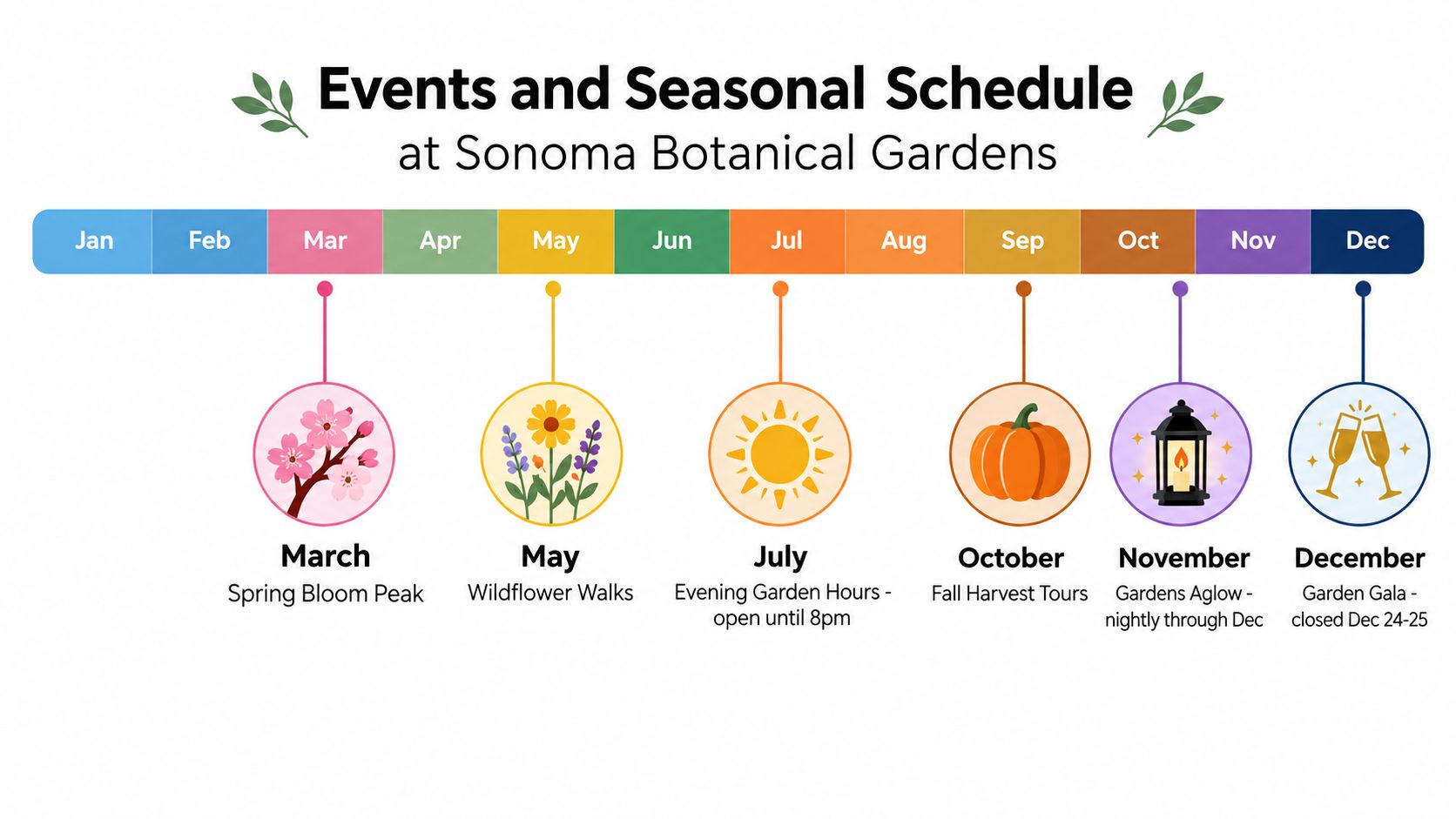
Spring programming often centers on plant sales and Earth Day family activities. That's a good period for gardeners and families who want a more educational outing. Summer brings evening concerts and the Summer Music Series, with extended hours on selected nights. If you're attending for music, reserve in advance and expect parking to be more complicated than on a normal afternoon.
Gardens Aglow is the headline fall and winter experience. Lantern-lit evening walks draw larger crowds and use advance tickets with timed entry. Regular daytime access may be compressed or changed, and walk-up availability is not something I'd gamble on. The garden says parking is free but limited, recommends carpooling for event nights, and can't host buses, according to its official homepage.
Early November typically brings the Garden Gala, when daytime visitors may find the garden closed for the fundraising event. Winter holiday light extensions create another special-event window, while January and February weekdays are generally the better choice for a calmer daylight visit.
For nearby wine-country planning, you can also find events at the winery and build a broader Glen Ellen itinerary. Keep the garden's event ticket confirmation on your phone, arrive with everyone already briefed on the entry time, and carpool whenever possible.
Hours, Admission, Parking, and Travel Time to Sonoma Botanical Gardens
Check the official visitor page before leaving because hours shift with seasons and special events. The garden currently posts changing schedules that include daily 10 a.m. to 5 p.m. hours, Wednesday evening extensions during part of the year, and special closures connected with events such as Garden Gala. Gardens Aglow can compress regular hours and move admission into evening time slots. The safest approach is to confirm the date-specific schedule rather than rely on an old listing.
Independent visitor listings report admission of $12 for adults, $10 for seniors, and $8 for teens, students, and active military, with children under 12 free. Those prices appear in independent Sonoma visitor listings, while the official site remains the better source for current operations and event conditions. Admission categories and event pricing can change, so verify before departure.
Parking and arrival strategy
Parking is free but limited. The garden recommends carpooling for event nights and states that buses can't be accommodated. That makes a normal weekend afternoon manageable only if you're comfortable with a more constrained arrival, while Gardens Aglow and concerts require stronger planning.
The garden is about 8 miles north of Sonoma, as stated in its official visit information. From other Sonoma County starting points, the drive can vary substantially with traffic and road conditions. The final approach on Friday Hill Road is narrow and winding, so drivers should slow down, avoid last-minute passing, and give grandparents or young children time to settle before walking.
| Starting Point | Approx. Drive Time | Best Departure Window | Notes |
|---|---|---|---|
| Santa Rosa | Check live navigation | Morning or after the busiest midday period | Use extra care on the winding final approach |
| Petaluma | Check live navigation | Earlier in the day | Plan for a rural approach and limited parking |
| Healdsburg | Check live navigation | Morning for a relaxed visit | Combine with other destinations only if your group has stamina |
| San Francisco | Check live navigation | Leave with event reservations secured | Traffic can make a half-day plan less predictable |
| East Bay | Check live navigation | Start early for daytime entry | Confirm the return plan before booking evening events |
My local rule is to confirm hours, admission, event status, parking instructions, and route conditions on the morning of the visit. Don't assume a listing showing daily hours reflects the garden's current schedule.
Is Sonoma Botanical Gardens Right for Your Next Outing
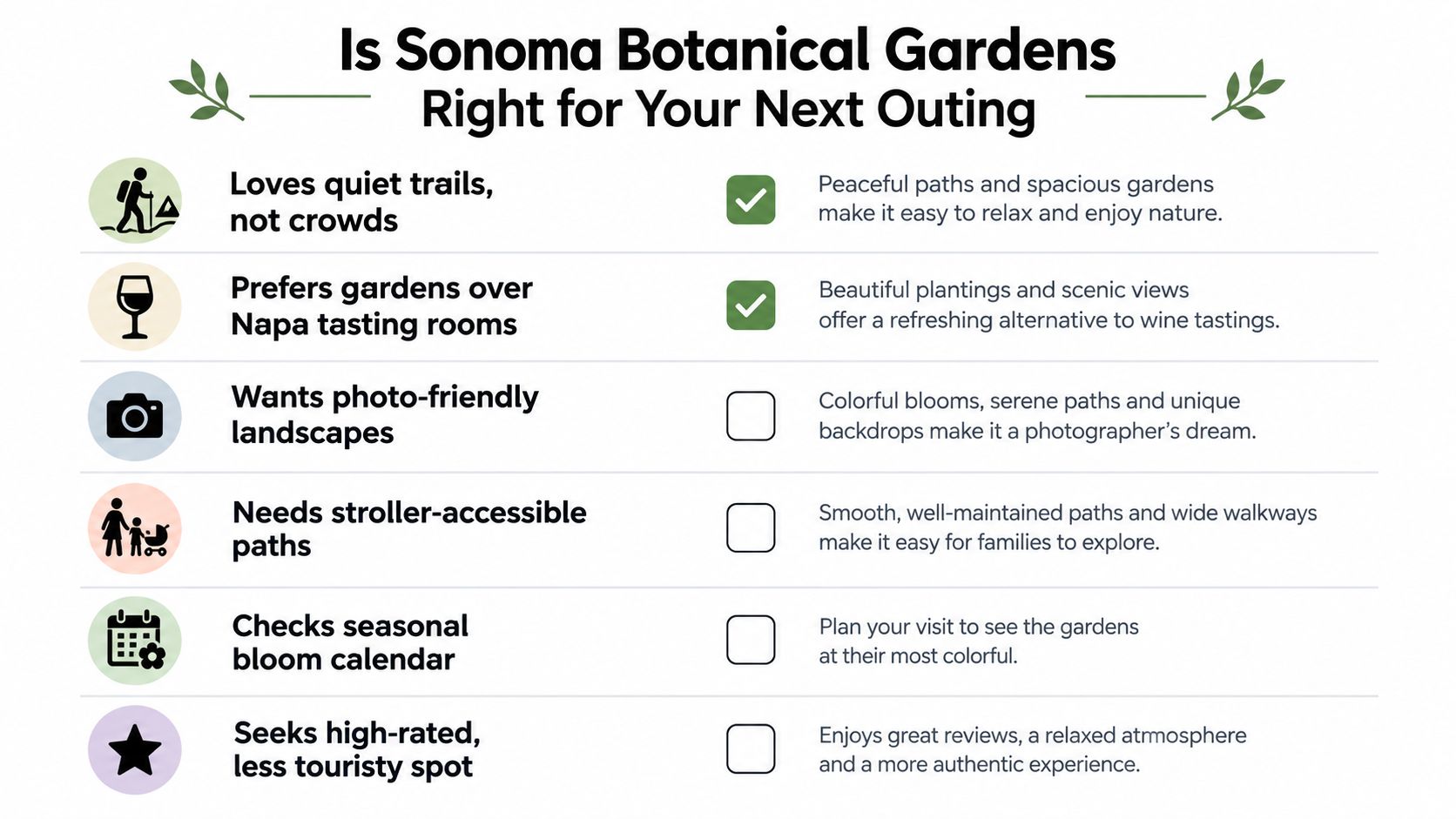
Choose Sonoma Botanical Garden if your group values quiet trails, unusual plants, and a terrain that feels more like a conservation garden than a conventional park. It's a strong pick for visitors who prefer a less commercial alternative to Napa estates, photographers looking for seasonal foliage, and families with older children who can manage elevation changes.
It's a poor match for anyone expecting a flat, fully paved botanical walk. Wheelchair users with needs beyond the accessible areas, families relying on stroller-friendly circulation, and visitors arriving late with only a short window should choose a more predictable destination. The garden rewards time and patience. It doesn't reward rushing.
My recommendation for Sonoma County groups
For a Santa Rosa family with older children and active grandparents, I'd recommend a daylight visit during a season matched to your priorities. Spring offers the clearest floral payoff. Summer favors shade and woodland atmosphere. Fall suits photographers, while winter works for visitors who appreciate bark, conifers, and garden structure.
For mixed-mobility groups, call first and treat the accessible route as the main experience rather than assuming the whole property is available. For stroller-bound toddlers, I'd choose a flatter outing unless the adults are comfortable shortening the visit. Compared with Bodega Bay or Jack London State Historic Park, this garden offers a more specialized plant experience, but the curvy backroad approach, limited cell signal, and winter weather risk make it less forgiving.
Use this checklist before you leave:
- Confirm hours: Check the date-specific schedule and any special closure.
- Check the weather: Bring layers for changing Sonoma Valley conditions.
- Verify reservations: Reserve timed event entry or concert tickets online.
- Plan parking: Carpool for evening programming and arrive with a backup plan.
- Pack water: Bring enough for children, grandparents, and the uneven route.
- Wear walking shoes: Skip sandals if you expect to explore beyond the entry area.
- Call about access: Ask about current terrain, restroom access, tram requests, and sensory-friendly arrival options.
The verdict is direct. If quiet, plant-focused time matters more than turnkey convenience, Sonoma Botanical Garden earns the drive. Check the official schedule, call ahead about mobility needs, and then use Sonoma County Navigator to plan the rest of your local day around a visit that fits your group.
Sign up for Sonoma County Navigator
Discover Sonoma County! Latest News, places to play, stay, eat, live, shop, learn and more!
No spam. Unsubscribe anytime.