
Before you even think about dropping a pot in the water, let's talk about the most important part of crabbing in Bodega Bay: the rules. Getting this right protects the crab population and saves you from a seriously hefty fine. Consider this your pre-trip briefing—it’s the first and most crucial step.
Bodega Bay Crabbing Rules: What You Need to Know
Your entire crabbing trip hinges on a solid understanding of the regulations set by the California Department of Fish and Wildlife (CDFW). These aren't just friendly suggestions; they’re strictly enforced to keep the fishery healthy for everyone. Getting it wrong can mean losing your gear, your catch, and a lot of money.
The two main species you'll be after are Dungeness and Rock crabs, and each has its own set of rules for seasons, size, and how many you can take home. And if you're heading out on the water, knowing the required safety equipment on a boat is just as critical as the crabbing laws themselves.
To make things easier, here's a quick look at the key rules for crabbing in Bodega Bay.
Bodega Bay Crabbing At-a-Glance
This table is a quick reference for the key rules for Dungeness and Rock crabs in Bodega Bay. Always check the official CDFW website for the most current regulations before your trip.
| Feature | Dungeness Crab | Rock Crab |
|---|---|---|
| Minimum Size | 5 ¾ inches | 4 inches |
| Daily Limit | 10 crabs per person | 35 crabs per person |
| Female Crabs | Must be released | No restriction |
| Season | Varies (check CDFW) | Open all year |
Remember, these regulations can and do change. A quick check of the official CDFW site before you leave home is always the best policy.
Seasons and Why They Change
The recreational season for Dungeness crab usually kicks off in early November and runs until late June or July. But here’s the catch: those dates have become incredibly unpredictable lately.
Recent seasons have seen major delays and early closures, mostly to protect migrating humpback whales from getting tangled in crab pot lines. Since about 2014, as whales have started feeding closer to shore, entanglements have become a serious issue, leading regulators to make last-minute changes to the season.
Local Tip: Seriously, always check the official CDFW website for the most current crabbing season dates right before you head out. These can change with very little notice based on whale activity and other environmental factors.
Size and Bag Limits
Knowing what you can keep versus what you have to throw back is non-negotiable.
- Dungeness Crab: Your keepers must be at least 5 ¾ inches wide, measured across the main shell (don't include the pointy spines). You’re allowed to take home 10 crabs per person, per day.
- Rock Crab: This covers brown, red, and yellow rock crabs. The minimum size is a bit smaller at 4 inches across the shell, and the daily limit is a very generous 35 crabs per person.
Here’s a big one: you must release all female Dungeness crabs. It's illegal to keep them. You can tell them apart easily—females have a wide, beehive-shaped flap on their underside, while males have a narrow, pointy one. This rule is what keeps the crab population breeding and healthy for future seasons.
Many of the best shore access spots are within the beautiful Sonoma Coast State Park, and these rules apply there just like everywhere else in the bay.
Finding the Best Crabbing Spots
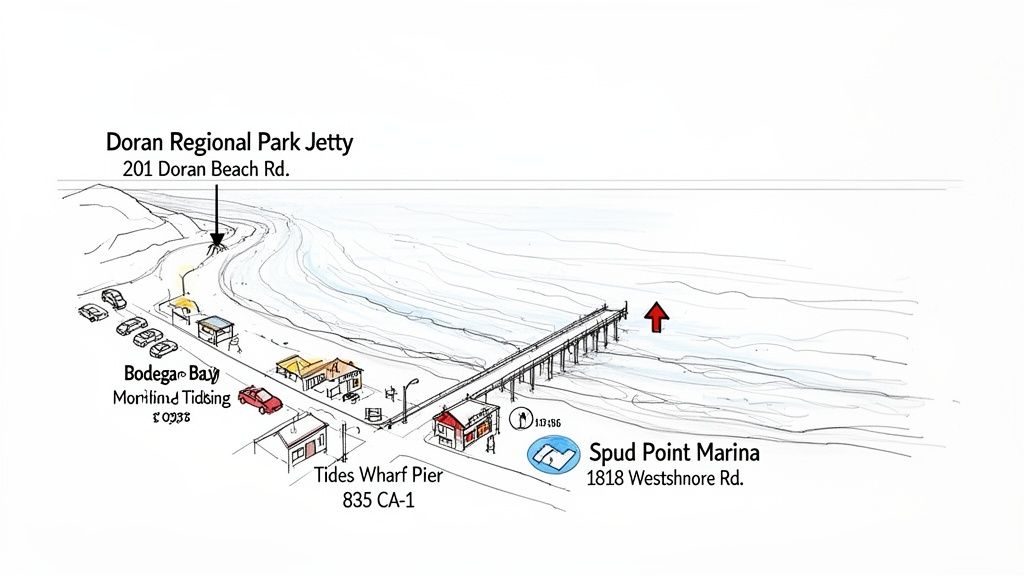
Knowing where to drop your pot is half the battle in Bodega Bay. While the entire bay holds promise, three public-access hotspots consistently deliver for us shore-based crabbers. Let's break down the local favorites, starting with the most popular spot.
Doran Regional Park Jetty
The rock jetty at Doran Regional Park is hands-down the most famous and productive spot for land-based crabbing here. It gives you direct access to the main channel where crabs are constantly moving in and out with the tides.
- Address: 201 Doran Beach Rd, Bodega Bay, CA 94923
- Hours of Operation: The park opens daily at 7:00 AM and closes at sunset.
- Access Tips: There is a $7 day-use fee per vehicle. Arrive early, especially on weekends, as the jetty parking lot fills quickly. The jetty is made of large, uneven rocks, so wear sturdy shoes with good grip. The best crabbing is often toward the end of the jetty in deeper water.
- Reviews: Crabbers love this spot for its high success rate with both Dungeness and Rock crabs, particularly on an incoming tide. While it can get crowded and gear can snag on the rocks, the consistent catches make it a local favorite.
Tides Wharf Public Pier
If you're looking for a more relaxed and accessible experience, the public pier at Tides Wharf is a fantastic choice. It's a classic wooden pier extending right into the harbor, giving you a stable platform that’s perfect for families or anyone who isn't keen on navigating the jetty.
- Address: 835 CA-1, Bodega Bay, CA 94923
- Hours of Operation: The pier is generally accessible 24/7, though the adjacent shops and restaurants have their own hours.
- Access Tips: Parking is free but can be competitive due to the popular restaurant and shops. The pier is flat and easy to walk on, making it ideal for all mobility levels. Try to find a spot away from boat traffic to prevent line tangles.
- Reviews: This spot is praised for its convenience, with a bait shop, restrooms, and food just steps away. While Dungeness catches can be less consistent than at the jetty, it's a reliable spot for Rock crabs and is considered perfect for beginners.
The real advantage of Tides Wharf is having everything right there. If you run out of bait or just get hungry, you don't have to pack up and drive. Help is just a few steps away.
Spud Point Marina Docks
Primarily a working harbor, Spud Point Marina is another excellent spot that puts you right in the middle of the action. Crabbing from the docks gives you deep-water access without needing a boat.
- Address: 1818 Westshore Rd, Bodega Bay, CA 94923
- Hours of Operation: Public access areas are open during daylight hours.
- Access Tips: This is a working marina, so be respectful of private boats and commercial operations. Parking is available in designated marina lots. The calm harbor water makes handling gear much easier than at the jetty. No fees for accessing public docks.
- Reviews: Many locals prefer Spud Point for its authentic, less-touristy atmosphere and report consistent Dungeness catches. Reviewers appreciate the calm environment and deep-water access from the public docks, noting it's a great place to avoid crowds.
While you're exploring the coast, you might want to check out other nearby gems. We've got a great guide on the incredible views from Arched Rock Beach in Sonoma Coast State Park if you're looking to do more sightseeing.
Choosing Your Crabbing Gear
Having the right gear is the difference between a frustrating day and a full pot of crabs. Getting yourself properly equipped is the first step toward success in Bodega Bay, and what you'll need changes depending on whether you’re casting from the shore or dropping traps from a pier.
For crabbing from land, especially the rocky jetties, crab snares are king. These are small, bait-filled cages tied to a heavy-duty fishing line that you cast out into the surf. When you feel a crab tugging at the bait, a firm pull on the line cinches the loops shut around its legs, securing your catch. For this, you’ll want a sturdy surf rod, at least 8-10 feet long, paired with a reel that can handle a heavy test line (40-60 lbs) to haul those snares over the rocks without snapping.
Gear for Piers and Docks
If you’re setting up on a more stable platform like the Tides Wharf pier or the docks at Spud Point Marina, crab pots and ring nets are the way to go.
- Ring Nets: These are simple, cheap, and perfect for beginners. They’re made of two rings with netting that lies flat on the bottom. When you think a crab is munching on the bait inside, you pull them up quickly to trap it.
- Collapsible Pots: These are lightweight and super easy to transport. They work really well in the calmer harbor waters but can get pushed around a bit by strong currents.
- Rigid Pots: These are the heaviest and most durable option out there. They stay put even in rougher conditions, which makes them a reliable choice for the more exposed jetty areas if you don’t mind lugging their weight.
Just remember, all traps must have two 4 ¼-inch escape rings to let the undersized crabs get out. This isn't a suggestion—it's a critical legal requirement.
Any trap you leave in the water has to be marked with a buoy that clearly shows your GO ID number. Wardens check for this regularly, so don't forget it.
Bait and Local Suppliers
The secret to attracting crabs? Oily, smelly bait. You want something that creates a strong scent trail in the water to lure them in. The best options are often the cheapest and most effective: chicken parts (especially necks and backs), squid, and fish carcasses from salmon or rockfish work wonders. Just make sure to secure your bait firmly in the center of your snare or pot with a bait cage or some heavy-duty zip ties.
You don't need to haul everything with you, either. Bodega Bay has a couple of excellent local shops ready to get you geared up.
The Tides Tackle & Bait Shop
- Address: 835 CA-1, Bodega Bay, CA 94923
- Hours of Operation: Typically opens early around 6:00 AM and closes in the late afternoon. It's best to call ahead for seasonal hours.
- Access Tips: Located right on the Tides Wharf, it's the perfect one-stop shop for anyone crabbing from the public pier. Parking is shared with the wharf's restaurants and can get busy.
- Reviews: Visitors love this shop for its unbeatable convenience, fresh bait selection, and essential gear. Crabbers often say the staff provides helpful local tips and advice for beginners.
Bodega Bay Surf Shack
- Address: 1400 CA-1, Bodega Bay, CA 94923
- Hours of Operation: Generally open from 10:00 AM to 5:00 PM, but hours can vary by season.
- Access Tips: Located directly on Highway 1, it's an easy stop on your way into town. This is a great choice if you want to rent gear for a day instead of buying it all.
- Reviews: While known for kayak and surfboard rentals, they also carry essential crabbing supplies like pots and snares. Customers appreciate the friendly service and the option to rent equipment for a trial run.
Mastering Your Crabbing Technique
Alright, you’ve got the gear and the license. Now for the fun part. Turning all that prep into a bucket of fresh Dungeness comes down to technique, and what works in Bodega Bay is a little different depending on where you set up. Whether you're casting from the jetty or soaking a pot from a pier, it’s about more than just chucking your gear in the water. You need to read the environment and think like a crab.
This flowchart breaks down the first key decisions you'll make every time you head out.
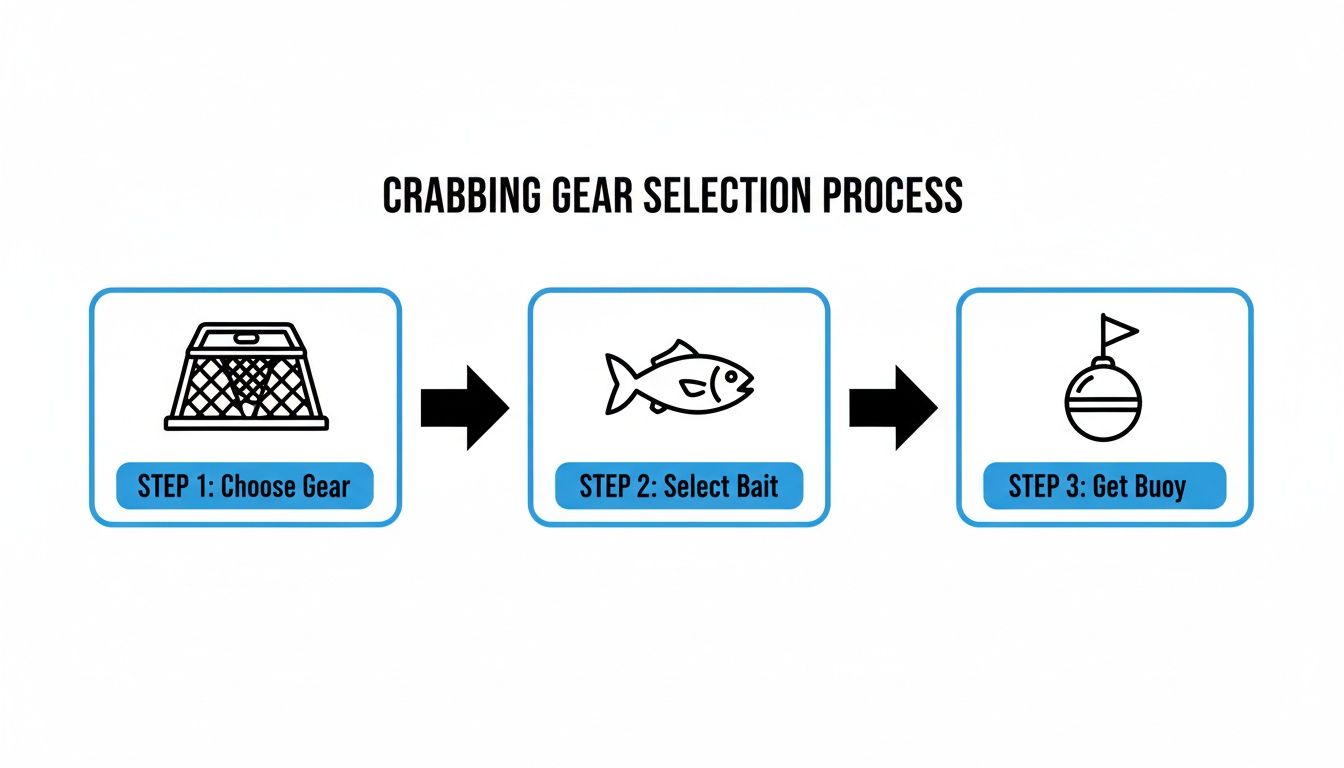
It really is that simple to start: pick the right tool for the job, load it with tasty bait, and make sure it’s marked so you can find it again.
Perfecting the Crab Snare Cast
If you’re posted up on the Doran Park jetty, a crab snare is your best friend. Start by packing the bait cage with something oily and strong-smelling—squid or an old chicken leg works wonders. The real trick is a long, powerful cast. You need to get your snare out past the rocks near the shore and into the deeper channels where the crabs are cruising for their next meal.
Once the snare hits the bottom, just let it sit. The biggest mistake rookies make is reeling in too fast or yanking on the line at every little bump. You have to develop a feel for the subtle taps and tugs that mean a crab is checking out your bait. It’s nothing like a fish strike; think of it more like a slow, persistent weight.
A good snare set feels less like a sudden bite and more like a heavy, steady pull on your line. Once you feel that consistent tension, give your rod a firm, sweeping tug—don’t jerk it—to cinch the loops. Then start a smooth, steady retrieve back to the jetty.
The Art of the Crab Pot Soak
Using pots or ring nets from a pier? Success here is all about the "soak time." Dropping a well-baited pot in a good spot is only half the battle. How long you let it sit underwater can make or break your day.
A good rule of thumb is to let your pot soak for 30 to 45 minutes. This gives the scent from your bait enough time to drift on the current and draw in any crabs nearby. If you leave it much longer, especially in areas with a lot of sea lions, you’re just inviting a whiskered thief to steal your bait or even your catch.
Reading Tides and Checking Your Catch
Tidal movement is what gets the crabs moving. The absolute best times to go crabbing in Bodega Bay are during the slack tides—those calm periods right before and after high or low tide when the water isn't ripping in or out. Crabs use this calmer water to scavenge for food, which makes them way more likely to stumble upon your bait.
The moment you pull a crab out of the water, you have two jobs: identify its sex and measure it. It is illegal to keep female Dungeness crabs. You can easily tell the difference by flipping them over (carefully!).
- Male: Has a narrow, pointed flap on its underside. Think of it like a lighthouse.
- Female: Has a wide, rounded flap. Think of it like the dome of the U.S. Capitol.
Always have a crab gauge handy. Measure every Dungeness straight across its back, from point to point, not including the spines. Anything under 5 ¾ inches goes right back into the water. Following these rules is crucial for keeping the crab population healthy for generations to come.
Bodega Bay's fishing heritage is a huge part of its identity. Back in the 1940s, the local fishing scene boomed in what old-timers still call the golden age, with Dungeness crabbing leading the charge. When quick-freezing technology came along, it turned crab from a local delicacy into a major commercial product, cementing Bodega Bay’s reputation. That rich history is something to think about every time you see those buoys bobbing in the bay. You can learn more about this fascinating past on norcalpublicmedia.org.
Handling and Cooking Your Catch
A successful day of crabbing in Bodega Bay isn't over when you pull your last pot. The final, and arguably most rewarding, step is turning that hard-earned catch into a spectacular meal. Getting your crabs from the bay to the table takes a little know-how, whether you’re doing it all yourself or getting a hand from the local pros.
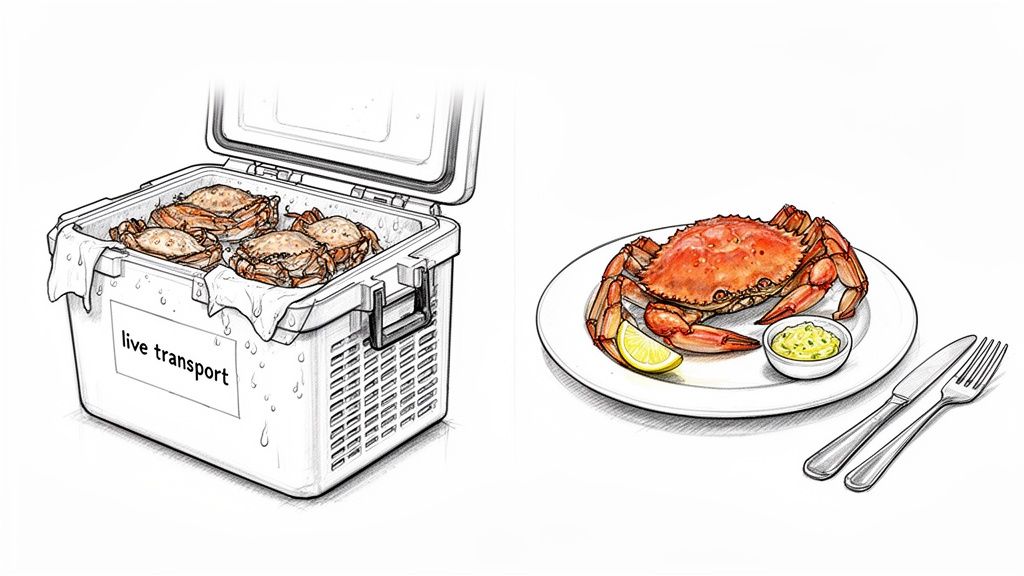
First thing's first: getting them home. You need to transport your crabs legally and humanely. Live crabs need to stay cool and moist, but you should never submerge them in fresh or salt water, as this will quickly suffocate them. A cooler with a damp towel or a bit of seaweed draped over the crabs is the perfect setup for the ride home.
Cleaning and Preparing Your Dungeness Crab
Cleaning a crab might look intimidating if you’ve never done it, but it’s a pretty straightforward process. The most humane approach is to dispatch the crab quickly right before you boil it. You can clean it either before or after cooking, but I find cleaning it beforehand gives the meat a much cleaner, less "gutsy" flavor.
It’s just a few quick moves:
- Remove the Carapace: Flip the crab over and find the abdominal flap (the "apron"). Pull that up, get a good grip on the body with one hand, and pull the top shell (carapace) off from the back.
- Clean the Insides: Scrape out the feathery gills, which some people call "dead man's fingers," along with the other internal organs (viscera). A quick rinse under cold water gets rid of any leftover bits.
- Break in Half: Give the crab a firm snap right down the middle. This makes the pieces much easier to handle and helps them cook evenly in the pot.
Just like that, your crab is ready for cooking.
There's nothing like a freshly cleaned and cooked crab. That whole journey—from pulling up the pot to taking that first incredible bite—is what connects you directly to the amazing marine life of Bodega Bay.
Local Cook-and-Crack Services
If you’d rather skip the prep work and get straight to eating, you’re in luck. Several local spots offer "cook-and-crack" services, and Fishetarian Fish Market is one of the most popular and reliable options.
Fishetarian Fish Market
- Address: 599 CA-1, Bodega Bay, CA 94923
- Hours of Operation: Typically open daily from 11:00 AM to 6:00 PM, though hours can vary with the season.
- Access Tips: They offer a convenient "cook-and-crack" service, usually priced per crab. Just bring in your legal, live catch, and they'll handle the cooking and cleaning for you. It's a great way to enjoy your catch without the mess.
- Reviews: Fishetarian earns rave reviews for its incredibly fresh seafood, friendly service, and delicious casual meals. Their cook-and-crack service is highly recommended by visitors as a lifesaver for those who don't have cooking facilities or want to avoid the hassle.
A Simple Recipe for Your Catch
You really don't need a complicated recipe to enjoy fresh Dungeness crab. In fact, simple is almost always better. After you’ve successfully caught your crab, the only thing left is to prepare an amazing meal. For that, you'll need the right tools, including the best pans for cooking seafood.
For a classic Bodega Bay experience, just steam the cleaned crab halves for 7-10 minutes. You'll know they're done when the meat is opaque and firm.
Serve them immediately with a couple of small bowls of melted garlic butter and some fresh lemon wedges for dipping. This simple preparation lets the sweet, delicate flavor of the Dungeness crab truly shine. If you want more local culinary ideas, be sure to explore the amazing food and drink scene in Sonoma County.
Common Questions About Bodega Bay Crabbing
Even the most seasoned crabbers have questions, and if you’re new to crabbing in Bodega Bay, you probably have a few practical ones. Getting these details right can be the difference between a great day on the coast and a frustrating one. We've gathered the most common questions to help you plan your trip with confidence.
Do I Need a Fishing License for Pier Crabbing?
Yes, you absolutely do. This is one of the most common points of confusion for newcomers. While you can often fish for finfish from a public pier in California without a license, the rules for crustaceans are different.
Anyone 16 years of age or older needs a valid California sport fishing license to take any kind of crab, anywhere in Bodega Bay. That includes from public piers, jetties, and the shore. Wardens definitely make their rounds, so it’s smart to purchase your license online from the CDFW website or grab one at a local tackle shop before you even think about dropping a pot.
What Is the Best Time of Day to Crab?
Timing really is everything. Crabs are most active during slack tides—that sweet spot of minimal water movement right around high or low tide. This is when they tend to wander out from their hiding places to forage for food, making them much more likely to stumble upon your bait.
An incoming tide is also a fantastic time to set your gear. The current helps carry the scent of your bait farther out into the bay, basically ringing the dinner bell and drawing crabs toward your pots or snares. If you can, try to avoid crabbing during a strong, outgoing tide, as it can be tough to keep your gear from getting dragged away.
The most productive crabbing happens when the water is moving the least. Your best bet is to aim for the hour before and after a high or low tide to really maximize your chances.
How Can I Tell Male and Female Crabs Apart?
Knowing the difference is absolutely essential, because it is illegal to keep female Dungeness crabs. Thankfully, it's very easy to tell them apart once you know what to look for.
Just carefully flip the crab over to examine its underside. You’ll see an abdominal flap, which some old-timers call the "apron."
- Male crabs have a narrow, pointed flap that looks a bit like the Washington Monument.
- Female crabs have a very wide, rounded flap that resembles the U.S. Capitol dome.
Always release the females gently back into the water. This one simple practice is vital for ensuring a healthy crab population for seasons to come.
What Happens If I Catch an Undersized Crab?
You have to release it immediately. Every single crabber is required to carry a proper measuring device, called a crab gauge, and you must measure every Dungeness and Rock crab you plan on keeping.
The minimum legal size for Dungeness is 5 ¾ inches, measured across the widest part of the shell (not including the pointy spines). For Rock crabs, the minimum is a bit smaller at 4 inches. Tossing back the little ones ensures they have a chance to grow and reproduce, which sustains the fishery for everyone.
At Sonoma County Navigator, we provide in-depth guides to help you explore every corner of our beautiful region. For more local insights, from outdoor adventures to community news, visit us and subscribe for free.

Sign up for Sonoma County Navigator
Discover Sonoma County! Latest News, places to play, stay, eat, live, shop, learn and more!
No spam. Unsubscribe anytime.