
If you’ve spotted a quirky, often cloudy bubbly showing up on wine lists and in local Sonoma County shops, you’re not alone. This is pétillant naturel, or pét-nat for short, and it's been charming wine drinkers who crave something authentic and a little bit wild.
Think of it as Champagne's rustic, free-spirited cousin. Unlike its more polished counterparts, pét-nat is celebrated for its raw, unfiltered, and sometimes unpredictable character. It’s sparkling wine in its most simple, unadorned form.
What Is Pet Nat Wine?
So, what’s the secret behind this fizzy phenomenon? It all comes down to a winemaking technique that’s as old as the hills: the méthode ancestrale, or the ancestral method.
It's a beautifully simple, one-and-done fermentation process. Winemakers press the grapes and let the juice start fermenting. But here’s the key part: before the yeast has a chance to finish its job converting all the sugar to alcohol, the wine is bottled and sealed with a crown cap—just like a beer bottle.
That fermentation continues inside the bottle, and the carbon dioxide it creates has nowhere to go. This trapped gas dissolves right into the wine, creating the delicate, zippy bubbles that make pét-nat so incredibly refreshing. Because there’s no secondary fermentation or added sugar (dosage), what you taste is a pure, unedited snapshot of the vineyard.
The Rise of a Rustic Bubbly
While it might feel like a new trend, this style of wine is actually a revival of how sparkling wine was first made centuries ago. Its recent explosion in popularity is tied directly to our growing desire for natural, low-intervention products. More and more, we're seeking out wines that feel genuine and connected to their agricultural roots.
Pét-nat wine offers a fresh, approachable, and fun alternative to traditional sparkling wines. Its vibrant and airy profile often has an easy energy that makes it incredibly drinkable and perfect for casual occasions.
This movement isn't just local; it has serious momentum in major markets across the US and Europe. Projections show that by 2026, the United States is expected to account for nearly 15% of global sparkling wine sales by value. California winemakers, especially here in Sonoma, are leading the charge in domestic pét-nat production to meet that demand. You can dive deeper into these market trends and opportunities in the US wine scene.
This surge reflects a collective craving for something different—a wine that’s less about rigid rules and more about expressing a sense of place. For a region like Sonoma County, with its deep-seated farm-to-table ethos, pét-nat just feels right at home.
From Grape To Glass: The Ancestral Method
At the very heart of pétillant naturel is a beautifully simple, ancient process known as the méthode ancestrale. This old-school technique is all about capturing a single, continuous fermentation right inside the bottle. It's a world away from the complicated, multi-step process used for Champagne and feels much more rustic and hands-off, letting the grapes truly speak for themselves.
The journey starts when grapes are picked, pressed, and begin to ferment, often with nothing more than the native yeasts hanging out on their skins. The real magic happens at a critical moment when the winemaker decides to bottle the still-fermenting juice. Unlike other sparkling wines, there’s no second fermentation and no added sugar. The yeast already in the juice just keeps doing its thing inside the sealed bottle, converting the last bits of grape sugar into alcohol and, crucially, carbon dioxide.
With nowhere to go, that CO2 naturally dissolves into the wine, creating that gentle, lively fizz. This single, uninterrupted fermentation is the soul of pet-nat.
The Magic Inside The Bottle
This hands-off method leaves a few signature traits that define pet-nat. Because the wine isn't disgorged (a fancy term for removing yeast sediment), it often has a hazy, cloudy look from the lees—or spent yeast cells—that hang around. This sediment is a good thing; it adds texture and complex, bready notes to the flavor.
This single fermentation also means a lower alcohol content, making pet-nat an incredibly refreshing and easy-drinking choice. Every bottle is a unique adventure, a raw, vibrant snapshot of the vineyard and the vintage it came from.
This visual breaks down the beautifully simple cycle from grape to glass.
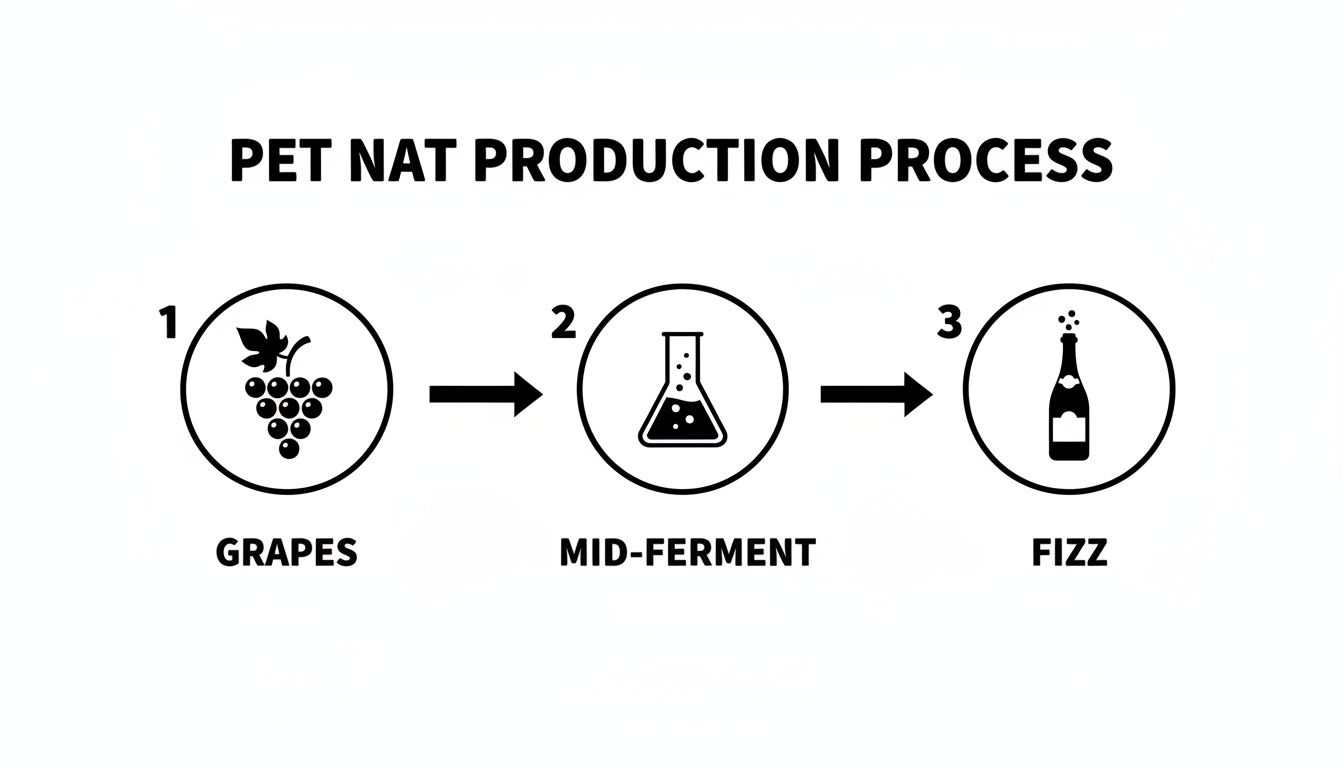
As you can see, pet-nat gets from start to finish in just three essential stages, really driving home the minimalist philosophy behind this style of wine.
A Natural Approach To Winemaking
The natural wine movement, with styles like pet-nat leading the charge, is shaking things up in the wine world. There's a big push for sustainability and minimal intervention, and Sonoma County is right at the forefront of this shift in California. These wines come from grapes grown without synthetic chemicals, relying on natural fermentation to show off their authentic terroir—think rustic fizz with notes of orchard fruit and yeast.
This commitment to authenticity and place is a huge part of what makes Sonoma County's winemaking culture so special. For anyone curious about the region's deep agricultural roots, you can learn more about Sonoma County's history and its journey through time. This backstory really helps explain why low-intervention styles like pet-nat feel so perfectly at home here.
How To Serve And Pair Pet Nat Wine
Let's be clear: pet nat is all about fun. Forget the stuffy ceremony that sometimes comes with traditional sparkling wines. This is the bubbly you bring to a casual picnic, a backyard barbecue, or a lively dinner party. Getting the most out of every bottle is easy once you know a few simple tricks, from chilling to pouring.
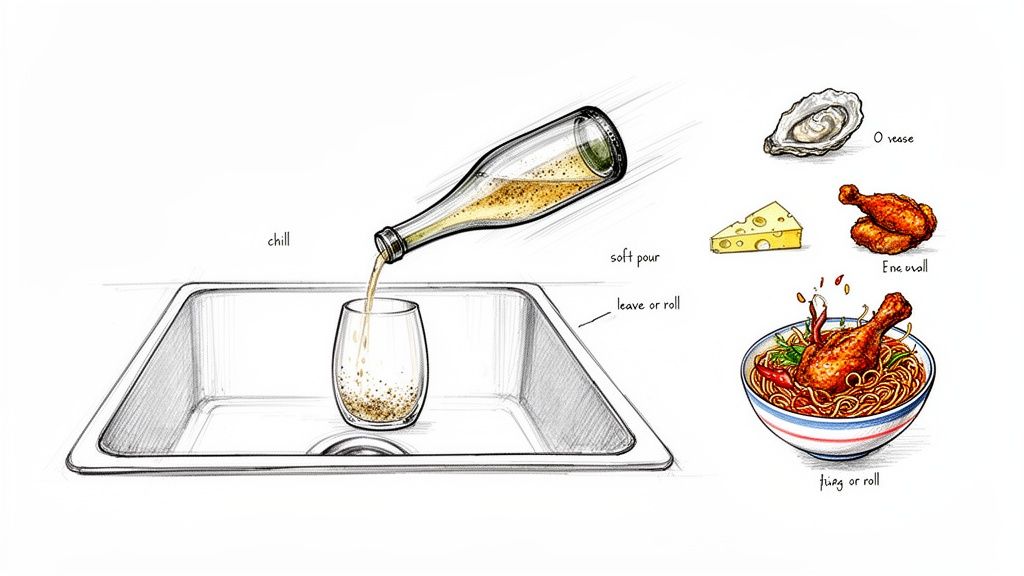
The first rule is to serve it chilled, but not ice-cold. You want to aim for a temperature somewhere between 40-50°F (4-10°C). This sweet spot keeps the bubbles lively and the flavors bright without dulling the wine's aromatic personality. Just pop the bottle upright in the fridge for a few hours before serving. This also helps the natural sediment settle at the bottom, which gives you more control when you pour.
Opening And Pouring Your Pet Nat
Because pet nat is bottled while it's still fermenting, there can be a surprising amount of pressure built up inside. Some bottles are pretty energetic! It's always a smart move to open it over a sink or even outdoors, just in case things get a little fizzier than you anticipated.
Point the bottle away from yourself and anyone nearby, and gently ease off the crown cap. A slow, controlled release is the secret to avoiding a foamy mess and keeping all those precious bubbles in the bottle where they belong.
Once it's open, you've got a choice to make about the sediment at the bottom. This is part of the classic pet nat experience, and there are two ways to go.
- Pour Gently: If you're in the mood for a cleaner, crisper wine, just pour slowly and carefully. Leave the last cloudy bit of sediment behind in the bottle. This method really lets the wine’s bright fruit and floral notes shine.
- Mix It In: Want something a bit more rustic and full-bodied? Before you open it, gently roll the chilled bottle once or twice to mix the lees back in. This adds texture, complexity, and some really interesting savory, yeasty notes.
Perfect Food Pairings
Pet nat's zippy acidity and gentle fizz make it a superstar at the dinner table. It’s incredibly versatile. That freshness can slice right through rich, fatty dishes or beautifully complement lighter fare. It’s a natural fit for the farm-to-table lifestyle that defines so much of the California wine country.
Here are a few Sonoma County-inspired ideas to get you started:
- Fresh Seafood: The bright acidity is a dream come true with fresh oysters, grilled shrimp, or fish tacos.
- Artisanal Cheeses: Break out a cheese board with creamy goat cheese, brie, or a nutty aged gouda.
- Fried Foods: Those bubbles and that acidity cut straight through the richness of fried chicken or crispy calamari.
- Spicy Dishes: A pet nat with just a hint of sweetness can be a perfect partner for the heat in Thai or Vietnamese food.
At the end of the day, pet nat is an unfussy wine made for pure enjoyment. Don’t overthink it! Experiment with different pairings and have fun—its easygoing personality makes it a fantastic companion for almost any flavor. If you're curious to learn more about the region's food and wine scene, take a look at our guide to the California wine country.
Finding The Best Pet Nat In Sonoma County
Sonoma County is a playground for wine lovers, and its full-on embrace of the pétillant naturel movement has created a vibrant, exciting scene for fans of this rustic bubbly. From quirky, off-the-beaten-path tasting rooms to brilliantly stocked bottle shops, you're never far from discovering your next favorite fizzy find. Think of this guide as your treasure map to the best spots for sipping and buying pet nat across the region.
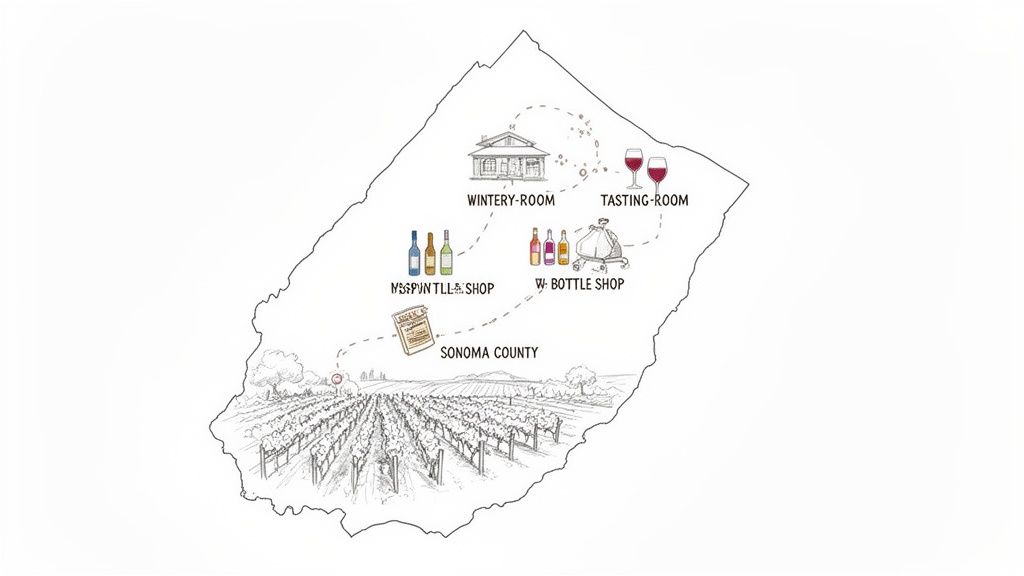
Here are a few standout producers and places that absolutely must be on every pet nat enthusiast's radar.
Pax Mahle Wines
Pax Mahle is a legend in the natural wine world, and for good reason. His pet nat offerings are consistently a highlight. Known for a laser focus on Rhône varietals and a hands-off, low-intervention approach, his sparkling wines are expressive, electric, and just beautifully reflect their Sonoma County roots. A visit to his tasting room is like a deep dive into the very heart of the modern California wine movement.
- Address: 6780 McKinley St #170, Sebastopol, CA 95472
- Hours of Operation: Open daily from 11:00 AM to 5:00 PM.
- Access Tips: Located in The Barlow, a bustling market district, the tasting room has a laid-back, industrial-chic feel. Reservations are highly recommended, especially on weekends. Plan for parking during peak times, as The Barlow gets busy.
- Reviews: Visitors consistently praise the knowledgeable staff and the vibrant, electric quality of the wines, frequently mentioning the Trousseau Gris pet nat as an absolute must-try.
Two Shepherds
Led by the thoughtful and talented winemaker William Allen, Two Shepherds is a small-production winery that has earned a serious cult following. Allen is known for championing lesser-known grape varieties and crafting wines with minimal intervention. His pet nats, often made from grapes like Picpoul or Carbonic Cinsault, are vibrant, incredibly food-friendly sparklers that are just brimming with character.
- Address: 7763 Bell Rd, Windsor, CA 95492
- Hours of Operation: Tastings are by appointment only, typically available on weekends.
- Access Tips: This is an intimate, behind-the-scenes tasting experience, often hosted by the winemaker himself. It feels genuine and unpretentious. You absolutely must book well in advance to secure a spot.
- Reviews: Guests rave about the personal and educational nature of the tastings with William. The experimental and unique varietals are a common highlight in reviews, with many calling it a standout Sonoma experience.
Bottle Barn
Sometimes you just want to grab a fantastic bottle and go. Bottle Barn is a true Sonoma County institution, famous for its absolutely massive selection and seriously competitive prices. While the sheer number of bottles might seem overwhelming at first, its shelves are a treasure trove for pet nat hunters, featuring both local gems and fascinating international favorites.
- Address: 3331 Industrial Dr, Santa Rosa, CA 95403
- Hours of Operation: Monday – Saturday from 9:00 AM to 7:00 PM; Sunday from 10:00 AM to 6:00 PM.
- Access Tips: A no-frills warehouse of wine. It’s all about discovery here. Don't be shy about asking for help! The staff is known for being incredibly knowledgeable and can point you toward hidden gems and new arrivals you’d otherwise miss.
- Reviews: Reviewers often describe Bottle Barn as a "wine lover's paradise" due to its vast selection and unbeatable prices. The expertise and helpfulness of the staff are frequently mentioned as a key reason for repeat visits.
Where To Find Pet Nat In Sonoma County
Your quick-reference guide to local wineries and wine bars offering unique pet nat experiences, with all the details needed to plan your visit.
| Venue Name | Address | Highlights & Vibe | Hours & Access Tips |
|---|---|---|---|
| Pax Mahle Wines | 6780 McKinley St #170, Sebastopol, CA 95472 | Industrial-chic vibe in The Barlow. Focus on Rhône varietals and energetic, expressive wines. | Daily, 11:00 AM to 5:00 PM. Reservations are a very good idea, especially on weekends. |
| Two Shepherds | 7763 Bell Rd, Windsor, CA 95492 | Intimate, personal tastings, often with the winemaker. Cult-favorite wines from unique grapes. | By appointment only, typically on weekends. Book far in advance. |
| Bottle Barn | 3331 Industrial Dr, Santa Rosa, CA 95403 | Massive warehouse selection with unbeatable prices. A treasure hunt for wine lovers. | Mon-Sat 9 AM-7 PM; Sun 10 AM-6 PM. Ask the knowledgeable staff for recommendations. |
This table is just a starting point. The beauty of Sonoma County is that new and exciting producers are popping up all the time, so keep your eyes peeled for the next great pet nat.
Planning a full Sonoma County adventure? Beyond the wineries, there's a world of activities to explore. Check out our comprehensive guide on things to do in Sonoma to round out your itinerary.
Exploring the pet nat wine scene is one of the best ways to experience the creative and agricultural spirit of Sonoma County. Whether you're tasting right at the source or picking out a bottle from a local shop, you’re connecting with a style of winemaking that is all about authenticity and pure, simple enjoyment.
Why Pet Nat Has Become So Popular
Ever wonder why this once-obscure wine is suddenly everywhere you look? The rise of pet nat wine isn't just some fleeting trend. It's a perfect reflection of a major shift in what we all want from our food and drinks today.
At its heart, the pet nat boom is driven by our growing desire for things that feel natural, authentic, and transparent. It's as simple as that.
Authenticity And Approachable Charm
Pet nat’s raw, unfiltered character is exactly what people are craving. For a new generation of wine drinkers, the appeal is its honesty. This wine isn't trying to be perfectly polished; its cloudy look and zippy fizz are proud signs of a hands-off approach in the cellar.
This rustic charm really connects with people who value craft and story over mass-produced sameness. It feels less like a product off an assembly line and more like a direct, living expression of the vineyard it came from.
Another huge reason for its popularity is just how easygoing it is. A bottle of fancy Champagne can feel like it needs a special occasion, but pet nat is refreshingly unpretentious. Its friendly price point makes it an easy "yes" for a casual get-together, a weeknight dinner, or a simple picnic in the park.
This mix of affordability and genuine character has kicked off something of a sparkling revolution, especially among younger drinkers. Pet-Nat's rise is part of a bigger movement where people in key markets like the US are turning away from heavy, serious still wines and reaching for lively, low-intervention alternatives instead.
The global wine market is projected to hit USD 372.06 billion by 2026, and you can bet the sparkling categories are driving a lot of that growth. Pet nat is perfectly positioned as a value-driven premium choice—it's way less expensive than Champagne but has all the sophisticated, craft-driven appeal you could want. You can dive deeper into the numbers with these global wine market forecasts on Mordor Intelligence.
The Unofficial Drink Of Sonoma County
Ultimately, pet nat just gets the sustainable, farm-to-table ethos that defines Sonoma County. It’s a style that celebrates the land, the grape, and the season with zero fuss. Its bright, zesty profile is a natural match for our region’s agricultural bounty and laid-back lifestyle.
Its fresh, approachable, and fun profile makes it incredibly drinkable. Pet nat has an easy energy that makes you want another sip immediately, making it the perfect welcome wine for any gathering.
This perfect alignment with our local values has helped make pet nat the unofficial drink of summer here in Sonoma. It's the bottle you grab for a day at the river or an evening barbecue—a fun, fizzy, and truly authentic taste of wine country.
Your Pet Nat Questions, Answered
As we've uncorked the wild and wonderful world of pétillant naturel, a few questions have probably started fizzing up. This last section is all about tackling those common curiosities, giving you the final pieces of the puzzle. Think of it as your go-to guide for becoming a confident pet nat pro.
Let's jump into the questions that will round out your knowledge.
Is Pet Nat Always Sweet?
This is easily one of the biggest myths about pet nat wine. Because they’re often so fruity and lively, people assume they're going to be sweet. But the truth is, most pet nats are dry.
Remember, the ancestral method means the wine is bottled before fermentation finishes. While a little residual sugar is still present at bottling, the yeast keeps working its magic inside, eating that sugar and turning it into alcohol and CO2. By the time you pop the cap, nearly all that sugar is gone, leaving a crisp, dry finish.
Of course, the exact level of sweetness can vary a bit based on the winemaker's touch, but a dry profile is the norm.
Why Is My Pet Nat Cloudy?
If you’ve been following along, you already know the answer here, but it’s a big one. That haze in your pet nat is totally normal and a key feature of the style. It's caused by the lees—the spent yeast cells that hang around in the bottle after fermentation.
Unlike traditional sparklers that go through a process called disgorgement to remove this sediment, pet nats are left unfiltered and untamed.
This sediment does more than just cloud the wine; it adds texture, complexity, and those delicious savory, bready notes. It’s a visible reminder of the wine's natural, hands-off roots.
So, don’t be afraid of the funk! That cloudiness is a good sign you’re drinking an authentic, rustic wine.
How Long Can I Keep An Open Bottle?
Pet nat is all about freshness. Once you pop that crown cap, its delicate bubbles fade much faster than those in Champagne or Prosecco. For the best experience, you’ll want to finish the bottle the same day you open it to get the full effect of its fizz and energy.
If you happen to have some left over, a good sparkling wine stopper will help preserve a bit of the carbonation. Stashed in the fridge, it might hold on for another day, but it won’t be nearly as bubbly. Just think of pet nat as a wine for the moment—meant to be opened, shared, and enjoyed right away.
What Is The Difference Between Pet Nat and Orange Wine?
This is a fantastic question, since both styles are darlings of the natural wine scene. The main difference comes down to how they're made.
- Pet Nat: This is all about the method for making sparkling wine (the méthode ancestrale). A pet nat can be white, red, or rosé, made from just about any grape.
- Orange Wine: This refers to a style of white wine. It's made by leaving the white grape skins in contact with the juice during fermentation—just like red wine. That skin contact gives the wine its amber color, tannins, and complex flavors.
So, while you can have an orange pet nat—a fizzy wine made from white grapes with extended skin contact—the two terms aren't the same. One is about the bubbles, and the other is about color and texture from skin contact.
Ready to explore the best of Sonoma County? At Sonoma County Navigator, we’re your trusted guide to discovering everything from hidden wineries to local news and family-friendly events.
Sign up for Sonoma County Navigator
Discover Sonoma County! Latest News, places to play, stay, eat, live, shop, learn and more!
No spam. Unsubscribe anytime.